

What Is an AI Automation Agency? Types and Who to Hire

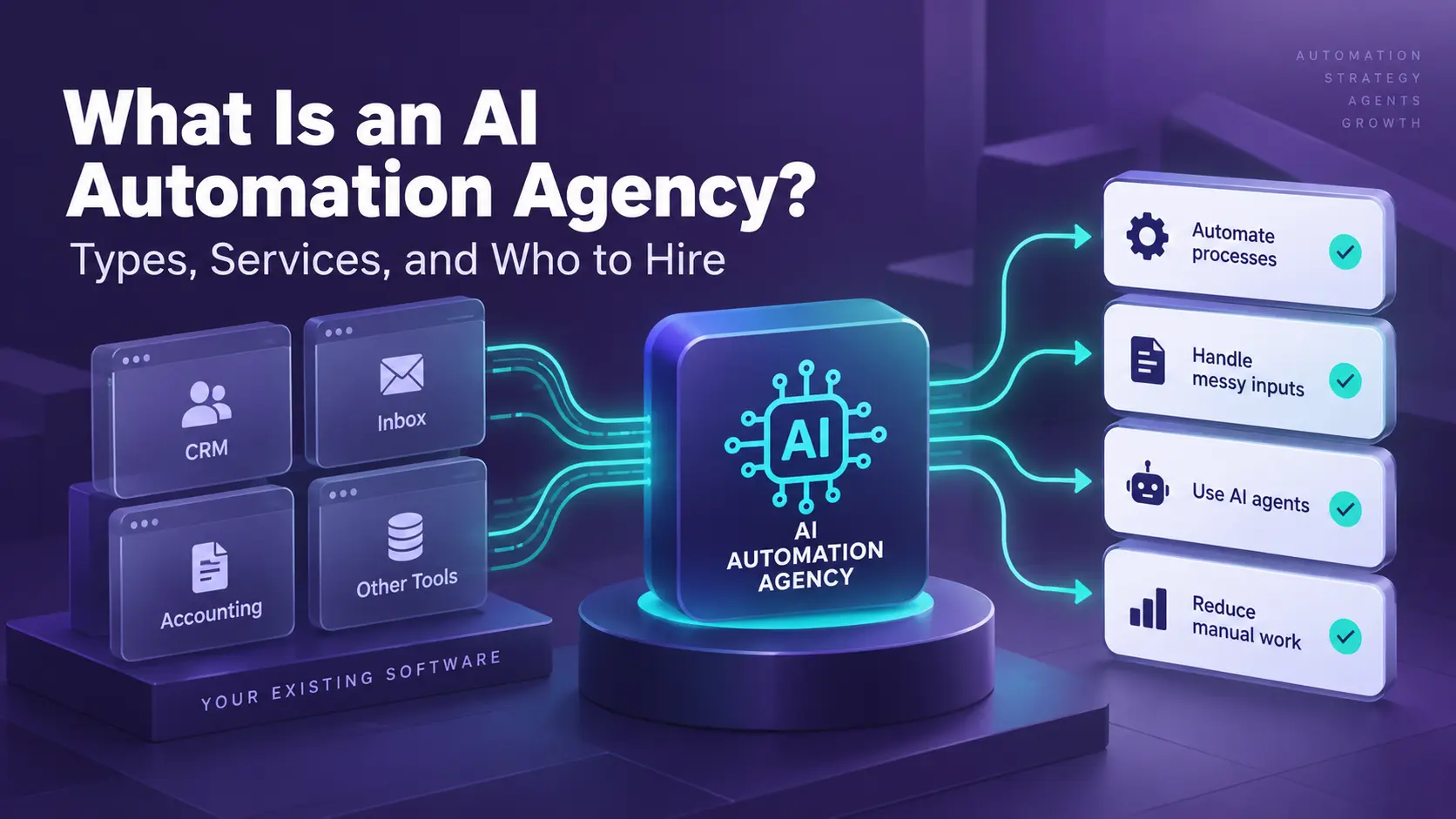
Cover reading What Is an AI Automation Agency, with CRM, inbox, and accounting tools feeding an AI agency block.
Written byPrincipal Data/AI Architect
Technically reviewed byMuneeb ud DeenBusiness Automation Consultant
Published
Updated
Reading time
17 min

Summarize with AI

Introduction

On October 13, 2026, Accenture and Workday launched a forward-deployed engineering program. Engineers from both companies work alongside client HR and finance teams to get AI agents into production. Workday CEO Aneel Bhusri put the stakes plainly: in payroll and finance, “almost right isn’t good enough.”

Companies without engineers to spare for this kind of work hire an AI automation agency instead. AI use is no longer limited to large enterprises, either. The US Chamber of Commerce’s 2026 report, published October 2, 2026, found 66% of small businesses now use AI, up from 23% in 2023.

The Census Bureau measures adoption more strictly, counting only recent AI use in any business function. Census data put the US rate at 19.8% in May 2026, rising to 37% among firms with 250 or more employees. So, many small businesses use AI tools without running AI inside core workflows yet.

This article explains the definition, the main types of AI agencies, when hiring one makes sense, and the top AI automation agencies to consider in 2026.

What Is an AI Automation Agency?

An AI automation agency is a company hired to build and maintain AI-powered workflows inside a client’s existing software. UK and European buyers often call the same kind of firm an AI automation bureau. The agency connects tools such as the CRM, the shared inbox, and the accounting system. AI models then read and act on the work flowing between the tools. As a result, staff handle fewer manual steps.

An artificial intelligence automation agency differs from a software house in scope. A software house builds a new product from scratch. An automation agency works inside the stack a business already pays for. So, most of the agency’s work is AI integration with tools already in place.

A recent example shows the work in practice. On October 15, 2026, Innover Digital published client results after becoming an OpenAI Select Partner. For an insurance client, an AI workflow triages up to 5,000 claims emails a month. About 75% of the emails are handled end to end.

Innover Digital also built a document workflow for an accounting valuation team. The workflow reads up to 100,000 financial documents per engagement. Only exceptions reach human reviewers. Innover’s validation on real engagement data shows an 85% to 90% cut in manual effort.

What Is an AI Agency? Types of AI Agencies Explained

An AI agency is any firm selling AI work to other businesses, from strategy advice to custom model building. The label is broad, so two firms with the same title can sell very different services. Five types show up most often. The table below compares them, then takes a closer look at each type.

Agency Type

What They Do

Best For

Typical Project

AI Automation Agency

Automates existing business processes with AI

Ops teams buried in repetitive work

Lead routing and CRM updates

AI Solutions Agency

Plans and rolls out AI across the business

Leaders without an AI roadmap

Readiness audit and rollout plan

Custom AI Development Agency

Builds custom AI software and models

Companies with unique data or products

Customer-facing AI app

AI Agent Development Agency

Builds autonomous agents, chatbots, and voice agents

High-volume support and sales teams

Voice agent for inbound calls

AI Automation Digital Agency

Marketing agency with added AI automation

Brands already using a marketing agency

AI content and ad reporting workflows

AI Automation Agency

This type of agency automates existing processes, such as lead intake, invoicing, or support triage. The work usually sits on no-code tools like Zapier, Make, or n8n, with AI models added at steps needing judgment. Projects tend to be smaller than custom builds. The type suits companies losing staff hours to repetitive work.

AI Solutions Agency

An AI solutions agency consults on where AI belongs in a business and helps implement the plan. Engagements start with interviews, process mapping, and a ranked list of use cases. Next, the agency builds or manages the first projects. AI strategy work suits companies unsure where to start, since the plan keeps money out of low-value pilots.

Custom AI Development Agency

A custom AI development agency builds AI software and models from the ground up. Typical work includes customer-facing AI apps, retrieval systems over company documents, and fine-tuned models. The scope goes beyond workflow automation, and so does the budget. The extra cost pays off when the AI itself is the product, or when off-the-shelf tools can’t handle the data.

AI Agent Development Agency

An AI agent development agency builds software able to plan and act with little human input. The output ranges from AI agents handling back-office tasks to voice agents answering phone calls. Every agent needs guardrails, testing, and monitoring before going live. Support and sales teams with high ticket or call volume are the usual buyers.

For the same support teams, customer-facing chatbots are a common entry point. A chatbot for order-status questions is easier to test than a fully autonomous agent, so starting with one lowers the risk.

AI Automation Digital Agency

An AI automation digital agency is a marketing or web agency with AI automation added to its services. The automation usually follows the marketing work, such as content production, ad reporting, and lead nurturing. Content production leans on generative AI models. Brands happy with a digital agency can add automation without a second firm, though deep back-office work still needs a specialist.

AI Automation Agency vs Traditional Automation Agency

An AI automation agency builds workflows able to make decisions, while a traditional automation agency builds workflows following fixed rules. A classic Zapier Zap moves data when a trigger fires, such as a new form entry creating a CRM contact. The rule never changes unless someone edits the Zap. AI-driven automation adds a model to read messy inputs and choose the next step.

Factor

Rule-Based Automation

AI-Driven Automation

Logic

Fixed if-then rules

Reads the input, then decides

Input Data

Structured fields only

Emails, PDFs, calls, and free text

Decisions

None beyond fixed rules

Classifies, scores, drafts, and routes

When Inputs Change

Needs a manual edit to the rule

Handles variation within its instructions

Typical Tools

Zaps, Make scenarios, RPA bots

LLM steps, AI agents, document AI

Best Fit

Stable, high-volume, predictable tasks

Variable tasks needing judgment

Rule-based and AI-driven automation are complementary. Zapier now sells both, with classic Zaps for fixed triggers and Zapier Agents for tasks needing judgment.

In a combined stack, fixed rules handle the predictable steps cheaply. Software bots still drive older systems without APIs. The AI layer then handles the exceptions where rules fail.

What Does an AI Automation Agency Do?

An automation agency takes over the repetitive work sitting between a company’s tools. Most projects fall into a short list of business areas. The AI automation services page gives the full breakdown. Most agencies sell work in the core areas below.

  • Lead handling covers capturing, scoring, and routing new leads within minutes.
  • Customer support bots answer common questions and triage the rest to staff.
  • Document processing pulls fields out of invoices, contracts, and forms through data extraction.
  • Automated reporting builds weekly reports and dashboards without manual exports.
  • Back-office projects replace manual handoffs with process automation.
  • Tool syncing keeps the CRM, billing, and help desk aligned over APIs.

Whatever the area, a well-built AI workflow never lets the model act on every input. The agency sets a confidence threshold for each decision. Inputs below the threshold go to a human review queue instead of moving forward. Every action gets logged, so a wrong decision can be traced and fixed.

The review queue has a cost, because human oversight eats into the gains. New G2 research, published October 14, 2026, found 45% of B2B decision-makers say oversight and rework consume more than a quarter of the expected productivity gains. The same survey found 46% report agent operating costs above expectations.

Strong agencies plan for oversight costs from the first meeting. Most projects then follow six steps, from the first audit to ongoing support.

  1. Record a baseline for one process, covering monthly volume, minutes per item, and error rate.
  2. Audit the process to measure how often exceptions occur and where the data lives.
  3. Clean up the data the workflow depends on, because scattered data stalls every later step.
  4. Design the workflow with a confidence threshold and a human review queue for each decision.
  5. Build and test on real historical inputs, then launch in stages with a named owner.
  6. Monitor results, update prompts and rules, and report one agreed number every month.

The audit and the data cleanup are the steps agencies rush most often. Skipping either one hides the real exception rate until after launch. Monitoring also takes staff time, since 31% of G2 survey respondents say staff spend six or more hours a week overseeing agents.

When Should You Hire an AI Automation Agency?

Bring in outside help once manual work starts costing more than the fix. The signs usually show up in staff hours, response times, and errors long before anyone budgets for automation. Six signs point toward an agency. Any two together justify at least an audit.

  • Staff spends hours each week copying data between tools.
  • The CRM, billing, and support tools don’t share data.
  • New leads wait hours or days for a first reply.
  • The same customer questions arrive every day.
  • Errors in invoices or orders come from manual entry.
  • An earlier in-house AI pilot stalled after the demo.

Once two or more signs show up, the next step is choosing a candidate workflow. Picking the right process matters more than picking the right tool. High-volume tasks with clear inputs and a measurable error rate tend to pay back fastest.

Companies unsure about readiness can score themselves first with a free readiness scorecard. Scale matters too. Small teams with only a few repetitive processes often get more value from a no-code tool and a few days of setup than from a full agency engagement.

An agency is one of four ways to get automation built. The table below compares the four options by fit, upkeep, and risk.

Option

Best For

Who Maintains It

Main Risk

DIY No-Code Tools

One or two simple, linear workflows

Your own team

Breaks quietly when inputs vary

Freelancer

One clearly specified workflow

The freelancer, while available

One person holds all the knowledge

AI Automation Agency

Multi-system workflows with AI steps

The agency on retainer, then your team

Lock-in without ownership terms

In-House Team

Automation as an ongoing core capability

Your own team

Slow start while hiring

How the Top AI Automation Agencies Were Picked

Every agency on the list passed the same checks, run on October 15, 2026. Each firm needed a live 2026 website, at least one named client, and a clear specialization. Independent reviews on Clutch or in the Zapier partner directory were required too. Pricing also had to be public or quoted on a free scoping call.

Data Prism, which publishes this article, appears at #1 with a disclosure. Placement on the list is free, and the same checks apply to all nine firms.

Top AI Automation Agencies in 2026

The top AI automation agencies in 2026 range from small Zapier specialists to engineering firms building custom AI apps. The table below compares the nine agencies side by side. Prices come from each agency’s site, Clutch profile, or Zapier directory listing, checked on October 15, 2026.

Agency

Specialty

Best For

Pricing Model

Location

1. Data Prism

AI automation and data engineering

SMBs with scattered data

Project, quoted after a free call

Atlanta, Dubai

2. XRAY

Zapier and Airtable automation

US mid-market ops teams

$250/hr or $15,000/month

New York, NY

3. Flow Digital

Zapier and AI workflow automation

Small budgets

Project, $100 minimum spend

Brooklyn, NY

4. BotsCrew

Conversational AI and AI agents

Customer support teams

Project, $10,000+ minimum

San Francisco, CA

5. Neurons Lab

AI agents for finance

Banks and insurers

Project, $100,000+ minimum

London, UK

6. Designli

AI product teams for founders

Custom AI apps for founders

Project, $10,000+ minimum

Greenville, SC

7. Azumo

Nearshore AI development

Custom AI apps on a budget

Project, $10,000+ minimum

San Francisco, CA

8. InData Labs

Custom ML and generative AI

Data-heavy custom AI apps

Project, $10,000+ minimum

Miami and Cyprus

9. Uptech

AI product design and build

Custom consumer AI apps

Project, $25,000+ minimum

Los Angeles and Poland

Nine more firms, mostly broader development shops, appear in a separate company shortlist.

1. Data Prism

Data Prism pairs data engineering with AI work from offices in Atlanta and Dubai. The firm’s team of data engineers, AI specialists, and developers builds AI automation, AI agents, and data platforms. Clients include Toast, Homebase, and Redpoint Ventures. Clutch shows a 5.0 rating from nine reviews.
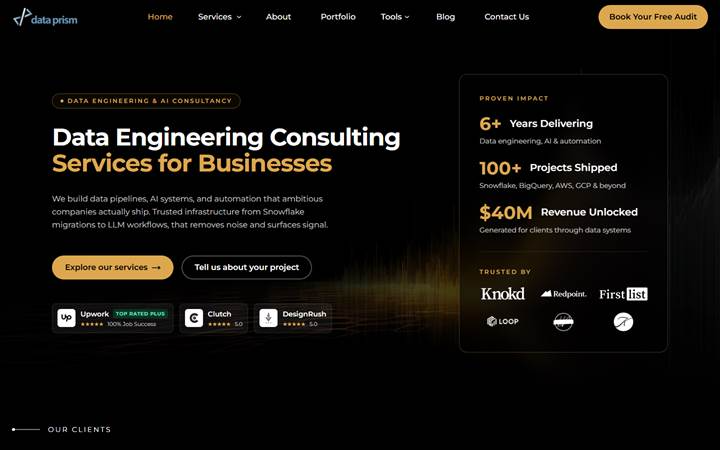
Data Prism homepage with a Data Engineering Consulting Services headline and 6+ years, 100+ projects, and $40M figures.

One automation project for a Shopify print shop moves customer orders, artwork, and proofs across three systems. The workflow checks for new orders every five minutes. As a result, routine manual work drops by up to 92%.

Scoping starts with a free 30-minute consultation. Data Prism fits best when a company’s automation depends on messy, scattered data.

2. XRAY

XRAY holds Zapier Platinum Partner status and a 5.0 rating from 111 reviews in Zapier’s partner directory. The New York firm has offered workflow automation and AI consulting since 2020. Named clients include FMSC, plus Level, where XRAY automated onboarding.
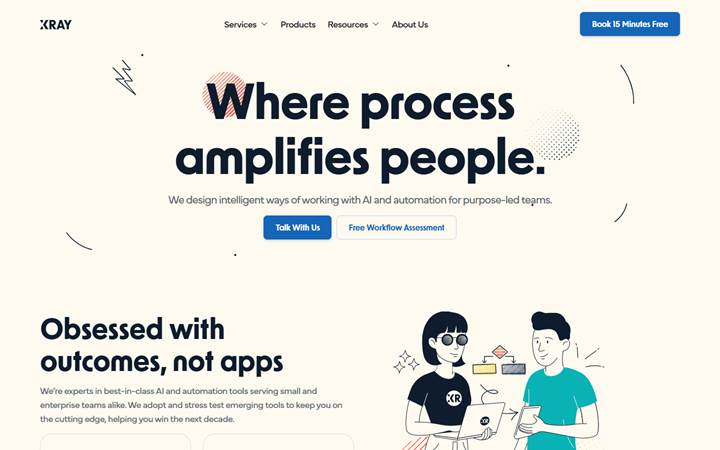
XRAY homepage with a Where process amplifies people headline, a Free Workflow Assessment button, and a team illustration.

Maintenance is where XRAY differs. The firm sells its own product, XR Guardian, to keep automations running after launch.

Pricing sits in plain view on the XRAY site, at $250 an hour or $15,000 a month for the XRAY Monthly plan. A US mid-market operations team built on Zapier and Airtable gets the most from the firm.

3. Flow Digital

Flow Digital, a Brooklyn workflow automation consultancy, carries more reviews than any other firm checked here. The Zapier directory shows a 5.0 rating across 473 reviews. The newest reviews date from July 2026.
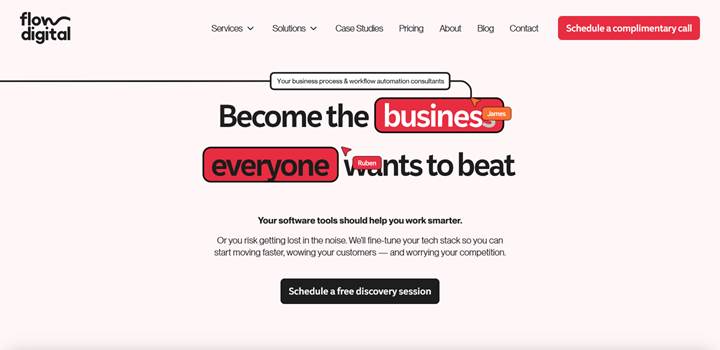
Flow Digital homepage with a Become the business everyone wants to beat headline and a free discovery session button.

Behind the reviews sits a team of 16 to 50 staff. Flow Digital holds Zapier Platinum Solution Partner status and sells AI automation alongside classic workflow builds. Logos on the firm’s site include Cash App, Sodexo, and MasterClass.

One published case study for GuideMe Japan pairs Airtable automation with an AI layer and reports 146% sales growth.

Entry costs stay low. The Zapier listing shows a $100 minimum spend, and a 75-minute implementation session costs $297. Small businesses can test the firm without a big budget.

4. BotsCrew

Founded in 2016, BotsCrew builds AI agents, chatbots, and voice assistants for customer-facing teams. The conversational AI firm is based in San Francisco and has a team in Lviv, Ukraine. BotsCrew’s Clutch profile shows a 4.8 rating from 40 reviews, the newest dated October 1, 2026.
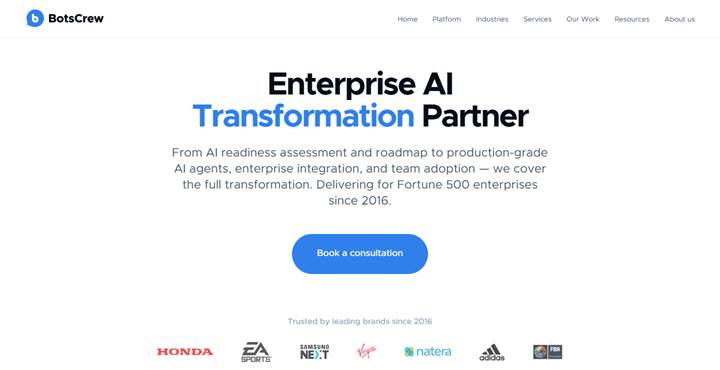
BotsCrew homepage with an Enterprise AI Transformation Partner headline and Honda, EA Sports, and adidas logos below.

Named work includes a voice and text agent for Honda Australia and an AI travel assistant for Choose Chicago. BotsCrew’s own figures for S&B Filters show a support agent live within four weeks. The agent automates up to half of incoming requests.

Clutch lists a $10,000 minimum at $50 to $99 an hour. Support teams can test an agent at the price before making a large commitment.

5. Neurons Lab

Neurons Lab is a London AI firm founded in 2019, with a second office in Singapore. Financial services is the main focus, and the work splits between custom AI agents and AI training. HSBC, Visa, and AXA are among the clients named on the Neurons Lab site.
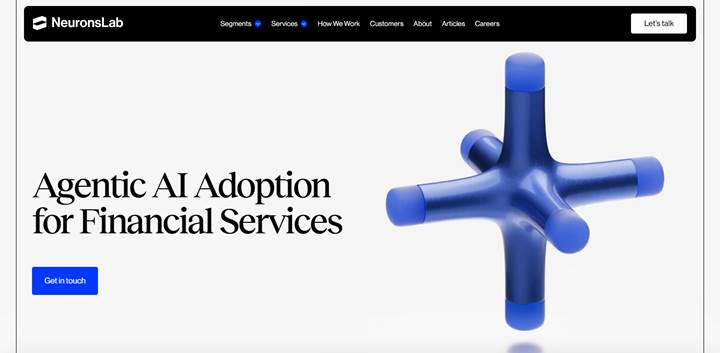
Neurons Lab homepage with an Agentic AI Adoption for Financial Services headline beside a blue 3D cross shape.

On June 2, 2026, Neurons Lab announced an AWS AI Competency in the agentic AI category. Named work includes an enablement program for HSBC leaders and marketing agents for Visa across at least nine markets.

Clutch shows 5.0 from five reviews, the newest from 2022, plus a $100,000 minimum. So, large financial institutions are a better match for Neurons Lab than small businesses.

6. Designli

Designli builds software and AI agents for non-technical and SaaS founders. The Greenville, South Carolina product studio was founded in 2013. Each project runs through what Designli calls AI-powered product teams.
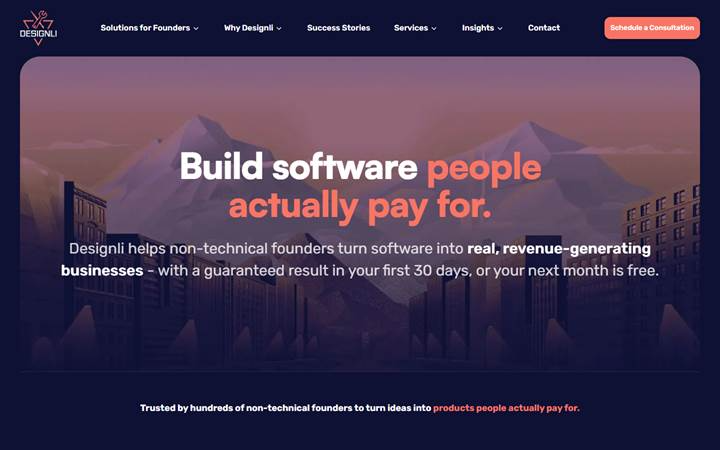
Designli homepage with a Build software people actually pay for headline over a mountain city scene at dusk.

TractionLab is the headline offer, promising a working MVP within 30 days. Secur.Space, National Trench Safety, and Grappos are among the studio’s clients.

On Clutch, Designli holds a 5.0 rating from 83 reviews, including reviews from Freight Mate and bSEEN Talent in August and September 2026. A $10,000 minimum at $50 to $99 an hour makes the studio an accessible entry point for founders building a first AI product.

7. Azumo

Azumo builds LLM apps, retrieval systems, voice tools, and computer vision. The San Francisco firm was founded in 2016 and staffs nearshore engineers in Argentina. Clutch shows a 4.9 rating from 27 reviews.
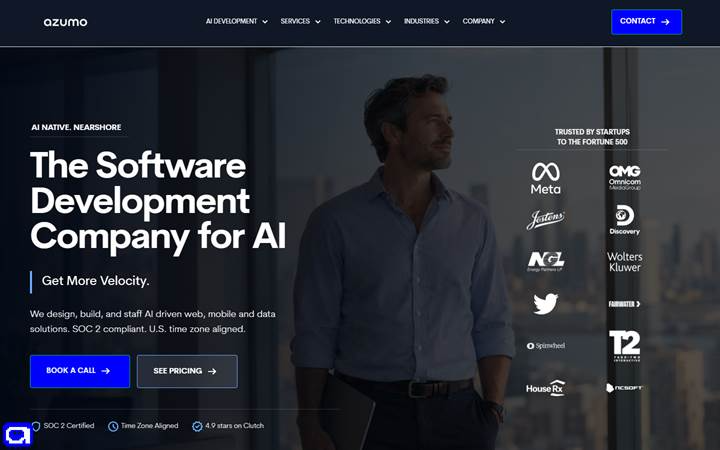
Azumo homepage with a Software Development Company for AI headline, a SOC 2 badge, and Meta and Discovery logos.

Licata Law Firm offers the clearest automation result. In an August 2026 Clutch review, the law firm says an AI agent built by Azumo automated the office workflow and cut staff labor time by 85%. Azumo also runs an AI phone receptionist of its own in production.

Pricing starts at a $10,000 minimum, at $25 to $49 an hour. For US teams, the draw is matching time zones at lower rates.

8. InData Labs

InData Labs lists two homes: a Miami address on its own site and a Cyprus head office on Clutch. The custom AI firm, founded in 2014, builds machine learning, generative AI, and computer vision systems. Flo and Wargaming are among the clients. Clutch shows a 4.9 rating from 20 reviews.
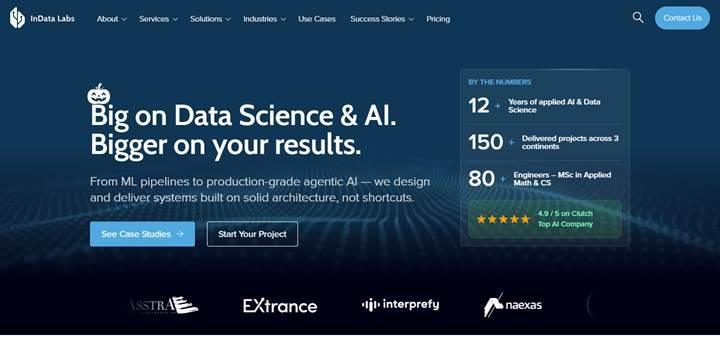
InData Labs homepage with a Big on Data Science and AI headline, project and engineer counts, and a 4.9 Clutch badge.

An in-house AI Platform Accelerator sets InData Labs apart. Backed by an internal R&D center, the accelerator speeds up the early stages of new builds. Projects start at $10,000 on Clutch, and data-heavy apps needing real machine learning are the natural match.

9. Uptech

Uptech designs and builds AI apps, chatbots, and mobile products for clients such as Dollar Shave Club and GOAT. The product studio was founded in 2016 and lists Los Angeles on its site, while Clutch places Uptech in Poland. The Clutch profile carries a 4.9 rating from 45 reviews.
Uptech homepage with a Building intelligent software for finance, healthcare, and beyond headline and a contact button.

The Presidio Investors project is a direct AI automation case. The system reads deal documents sent by email and extracts the data with OCR and GPT-4o. Then it creates the CRM records.

Uptech puts the result at 80% less manual work and capacity for up to 100 deals a day. Projects start at $25,000, at $25 to $49 an hour.

How to Choose the Right AI Automation Agency

The right agency has shipped work like yours and can show the results. Sales calls all sound alike, so every check needs to rest on evidence. Seven quick checks sort strong candidates from weak ones. The full selection guide covers each one in more depth.

  • Ask for two case studies in your industry or with your tools.
  • Read independent reviews on Clutch or a platform partner directory.
  • Get pricing in writing, including support after launch.
  • Confirm your company owns the workflows, accounts, and code at the end.
  • Ask who builds the work and who supports the workflows after launch.
  • Ask which AI model providers see your data, and whether the data trains any model.
  • Ask to see the human review queue in a live demo.

The last check matters most. An agency unable to show how unclear cases reach staff hasn’t planned for the moments when the AI gets things wrong.

Some sales-call answers are red flags. A firm quoting a price before any discovery work hasn’t studied the process yet. Promises of fully autonomous, customer-facing agents skip the review queue entirely. Once a firm passes these checks, the contract should put scope, ownership, data handling, and post-launch support in writing.

A single consultant is enough for some companies. The trade-offs between a consultant and an agency appear in a separate consultant comparison.

How Much Does an AI Automation Agency Cost?

Agencies charge by the hour, by the project, or on a monthly retainer. Published prices on this list run from a $100 minimum spend at Flow Digital to $15,000 a month for the XRAY Monthly plan.

Clutch minimums for the AI builders on this list run from $10,000 at Azumo, BotsCrew, Designli, and InData Labs to $100,000 at Neurons Lab. Oversight and support costs continue after launch, so the full-year figure matters more than the build price. A rough cost estimate helps set a budget before any sales call.

Project size explains most of the gap between quotes. A readiness audit is the smallest engagement, while a multi-system build with AI agents is the largest. Within each size, integrations add cost first, since each connected system needs its own testing. Messy data adds more, because cleanup comes before any build.

How Long Does an AI Automation Project Take?

Project length follows the same scope drivers as cost. A single workflow on tools already in place is the fastest build, while multi-integration workflows take the longest. Data cleanup adds the most variation, so scattered data means planning for extra weeks.

Talk Through Your Automation Plan

Everything above points to one decision: which process to automate first, and with whom. An AI automation agency earns the fee only when the first workflow targets real, measurable waste. Data Prism offers a free 30-minute strategy call with an engineer to map one candidate process. The call ends with a clear answer on fit, whether or not an agency is the right choice.

Book a Free 30-Minute Meeting

Discover how our services can support your goals — no strings attached. Schedule your free 30-minute consultation today and let's explore the possibilities.

Book a Free Call

Frequently Asked Questions

An AI agency is any company selling AI services to other businesses. The term covers strategy consultants, workflow automation shops, custom software builders, and agent developers, so buyers should ask which of these a firm actually delivers.

An AI automation agency improves existing processes with AI, usually on tools a company already owns. An AI development agency builds new AI software or models from scratch. Automation projects tend to be smaller, while development projects suit unique products.

Yes, for small businesses losing several staff hours a week to repetitive work. A business with only one or two simple workflows usually gets better value from a no-code tool and a short setup project.

No. The agency handles the build, the integrations, and the testing. The client side still needs one process owner, though. The owner explains how the work runs today, grants access to the tools, and handles the review queue after launch. Most of the owner’s time goes into the audit and testing stages.

Yes, in most cases. Agencies connect common CRMs, inboxes, help desks, and accounting systems through APIs or platforms like Zapier, Make, and n8n. Older systems without an API need software bots instead, which adds testing time. Asking for a case study on the same tools is the quickest way to confirm a fit.

Book Consultation