
AI Agent Development Services
Build intelligent AI agents that automate workflows, make decisions, use business tools, and execute tasks across your systems. We develop autonomous multi-agent that integrate with your data, applications, and cloud infrastructure.
- 30+AI Agents Delivered
- 24/7Autonomous Task Execution
- 70%Less Manual Processing
- 3XFaster Workflow Completion
Key Takeaways
Autonomous Workflow Execution: AI agents monitor events, make decisions, and execute tasks across business systems.
Custom AI Agent Development: Build AI agents tailored to your workflows, data sources, and operational requirements
Multi-Agent System Design: Deploy specialized agents that collaborate to manage complex business processes.
AI Agent Development Services We Offer
Single-Task AI Agents
Automate a specific business function, such as document processing, request classification, data monitoring, or customer support. They are easier to deploy and maintain than broader AI systems.
Multi-Agent AI Systems
Coordinate specialized roles across complex workflows. Responsibilities are distributed across multiple components to support research, analysis, decision-making, and execution.
Conversational AI Agents
Support natural interactions with customers and employees. They can answer questions, retrieve information, update records, and initiate actions while maintaining conversation context.
Autonomous Workflow Agents
These workflow agents monitor business events and execute multi-step processes. They can process requests, trigger approvals, update systems, and manage operational workflows with minimal manual involvement.
Tool-Using AI Agents
Interact with APIs, databases, search tools, and external applications. They can retrieve information, perform calculations, generate reports, and complete tasks that require access to multiple systems.
Benefits of AI Agent Development
Routine work becomes faster and more consistent when repetitive tasks no longer depend on constant manual effort. Organizations improve productivity, maintain consistent execution, and scale operations while keeping teams focused on higher-value work.
Automate Repetitive Processes
Reduce manual effort across document handling, approvals, reporting, and operational workflows.
Improve Operational Efficiency
Execute tasks faster, reduce delays, and improve process execution across teams.
Connect Business Systems
Connect applications, databases, APIs, and business tools to create reliable workflows across systems.
Scale Business Operations
Handle increasing workloads without adding operational complexity or manual effort.
Accelerate Decision-Making
Surface timely insights that support faster and more informed operational decisions.
Increase Process Reliability
Reduce errors through consistent execution, validation rules, and standardized workflows.
Our Certifications



How We Build Autonomous Systems
AI agent development starts by understanding business objectives, available data, and operational requirements. The solution is then designed, developed, validated, deployed, and continuously optimized to deliver reliable automation at scale.
Define Objectives
Business goals, agent responsibilities, available data, required tools, and approval requirements are defined. These decisions establish what the agent should automate, where human oversight is required, and how the solution will operate.
Design the Architecture
Once the objectives are finalized, the agent architecture, workflow logic, memory strategy, communication patterns, and system integrations are designed. Frameworks, models, and deployment architecture are selected to match the business requirements.
Build the Agent
With the architecture in place, the agent is developed, connected to required tools, and configured with prompts and workflows. Once the agent is set, response quality, task execution, and edge-case handling are tested and improvements.
Validate the Agent
The developed agent is evaluated for operational safeguards, escalation workflows, and reliability. Any issues are resolved before the solution is approved for production.
Deploy and Optimize
After successful validation, the agent is deployed into the production environment and continuously monitored. Performance, workflows, and model behavior are optimized over time to support changing business requirements.

Ready to Automate Complex Business Workflows?
Book an AI Agent Strategy SessionAI Agent Use Cases by Industry
Healthcare
Automate document processing, appointment coordination, patient communication, and administrative workflows.
Finance & Banking
Strengthen compliance processes, risk monitoring, reporting accuracy, and customer service operations.
SaaS & Technology
Automate user onboarding, technical support, knowledge retrieval, and internal operations across software organizations.
Retail & Ecommerce
AI agents handle customer inquiries, product data management, inventory monitoring, and order workflows.
Operations & Supply Chain
Automate shipment tracking, invoice processing, purchase order reconciliation, and predictive maintenance across supply chain operations.
Marketing & Advertising
AI agents automate competitor research, content generation, campaign management, and audience analysis across marketing workflows.
Success Stories
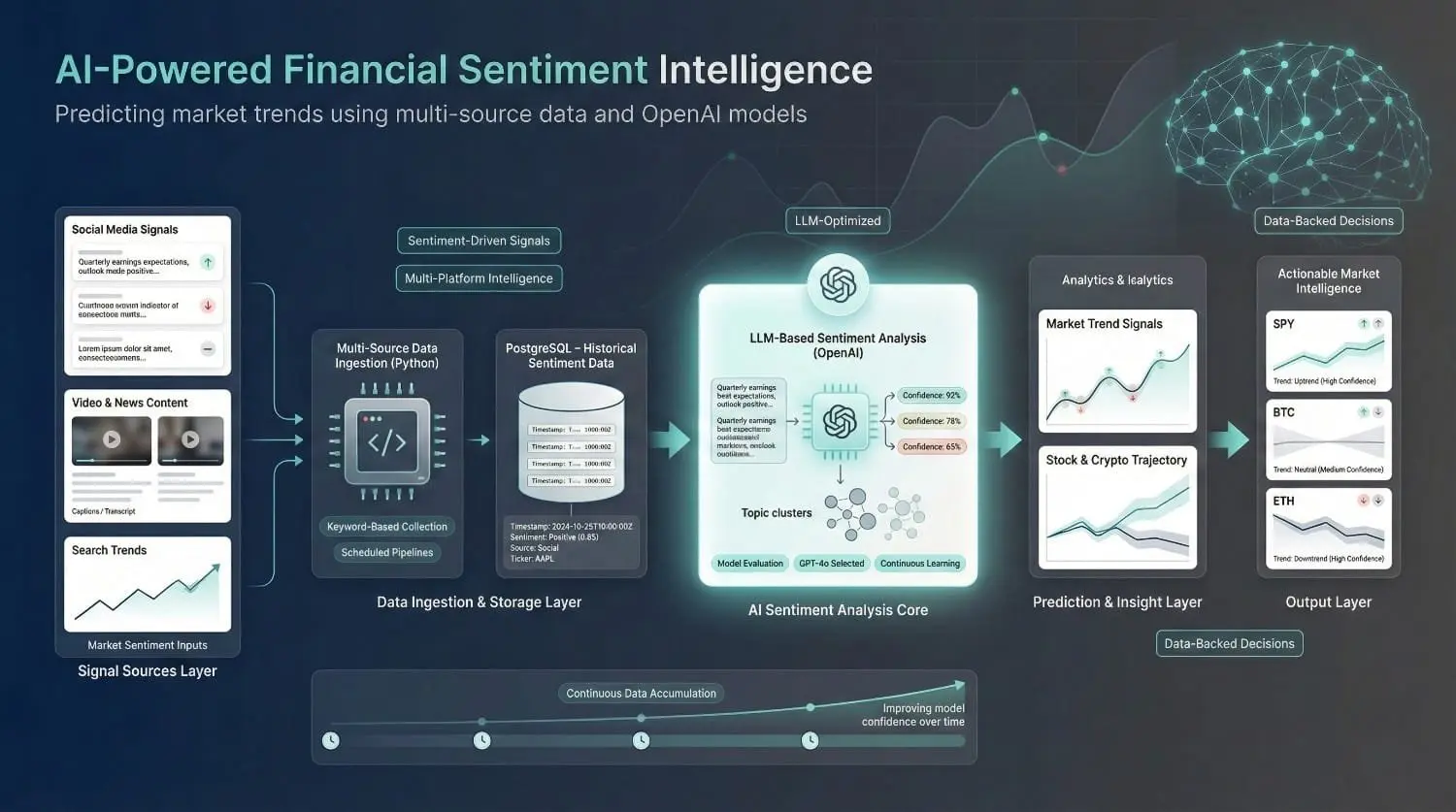
Financial Predictor using Sentiment Analysis via OpenAI API (for Maxx Source)
Maxx Source needed a sentiment analysis system for stocks and cryptocurrencies. DataPrism built a pipeline that gathered multi-platform data and used GPT-powered analysis to predict market trends.
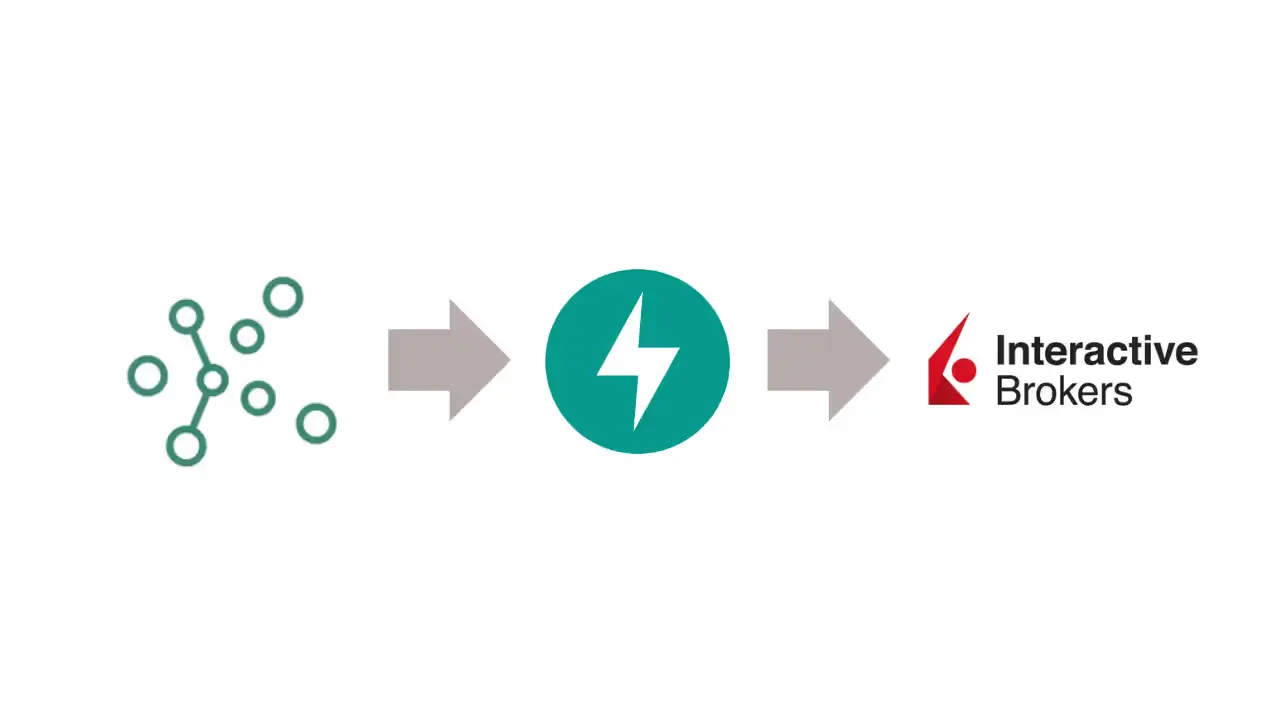
Interactive Brokers Bot
We used a signaling service (TrendSpider) to find out the right time and price to buy/sell the stocks. Once a signal is received, the bot connects with the TWS interface and makes the required transaction. It happens within a time bracket of 15 minutes.
Skyfare (FlyGPT)
We created a web application that asks users for their desired trip and uses chatGPT to find the best possible flights from all the airlines and agents. The user can also choose to mention the specifics of the tickets they need, like price range, airlines, and date(s) of traveling.
Tools and Technologies
- LangChain
- Python
- OpenAI
- Anthropic Claude
- Gemini Vision
- AWS
- Azure
- GCP
- Azure Api Management
- Azure Functions
- Google Vertex AI
- PostgreSQL
- MongoDB
- GraphQL
- Rest
- Oauth
- Webhooks
- Kubernetes
- AWS Step Functions
- Google Cloud Functions
- AWS Lambda
- AWS API Gateway
- LangGraph
- Amazon Bedrock
- CrewAI
Why Choose Data Prism for AI Agent Development
Successful AI projects require more than choosing the right model. They depend on reliable engineering, secure integrations, and production-ready architectures that support autonomous decision-making at scale.
AI and Data Engineering Expertise
Every autonomous system depends on reliable engineering foundations. Our team combines AI, software, cloud, and data engineering expertise to build practical solutions that perform reliably in production.
Production-Ready Architecture
Many prototypes work well in testing but struggle after deployment. We design architectures with built-in capabilities of scalability, monitoring, security, and long-term maintainability.
Cloud-Native Deployments
Every environment has different operational requirements. Solutions are deployed on AWS, Azure, or GCP using services that integrate with your existing infrastructure and operational needs.
Secure System Integrations
Autonomous systems rarely operate in isolation. We connect business applications, APIs, databases, and internal platforms while maintaining security, governance, and reliable data flow.
Long-Term Technical Partnership
Business requirements continue to evolve after deployment. Ongoing monitoring, optimization, model updates, and future enhancements keep the solution accurate and reliable over time.
Our Clients












Frequently Asked Questions
Tell us about your project
Share your details and we'll reply within one business day.