
AI Chatbot Development Services
Build intelligent chatbots that understand user intent, use trusted business data, and connect with existing systems to deliver accurate responses, automate routine interactions, reduce manual effort, and support faster business decisions.
- 35+AI Chatbots Delivered
- 24/7Automated User Assistance
- 50%Routine Queries Automated
- 4XFaster Response Times
Key Takeaways
Context-Aware Conversations - Understand natural language, retain relevant context, and respond according to user intent, instead of depending on rigid scripts.
Knowlege Based Answers - Use approved documents, databases, policies, FAQs, and product information to provide more relevant and reliable responses.
Connected Business Workflows - Retrieve information, update records, create tasks, and trigger approved actions across customer, sales, support, and operational systems.
Overcome the Limitations of Basic Chatbots
Custom AI Chatbot Development Services
Chatbot Consulting
Identify suitable chatbot use cases, user needs, platform options, knowledge sources, integrations, and success criteria. The result is a practical roadmap for development and deployment.
Custom AI Chatbot Development
Build tailored chatbots for websites, mobile apps, portals, Slack, Discord, and other channels. Each solution follows your business rules, workflows, brand voice, and user requirements.
LLM Chatbots
Develop chatbots using GPT, Gemini, Claude, Llama, Mistral, Gemma, or other suitable models. Cloud, private, and locally hosted deployments can be supported, including Ollama-based environments.
Customer Support Chatbots
Automate FAQs, order updates, account queries, appointment scheduling, troubleshooting, ticket creation, and human handoffs. Integrations provide access to current customer and service information.
Lead Generation Chatbots
Engage visitors, answer initial questions, collect contact details, qualify prospects, recommend relevant services, and schedule meetings. Lead data can be routed directly into sales systems.
Knowledge Base Chatbots
Provide conversational access to approved FAQs, policies, SOPs, manuals, product information, technical documents, and databases. Permissions and source controls keep responses aligned with authorized content.
Chatbot Integration
Connect new or existing chatbots with CRM, help desk, e-commerce, booking, communication, database, and workflow systems. These integrations enable data retrieval, record updates, notifications, and approved actions.
Success Stories
Explore how we have applied AI, data, and system integration capabilities to improve user interactions, information access, and connected workflows.

Influencer Marketing Analytics
Campaign data was spread across Instagram and Facebook, and teams collected it by hand. Recurring collection now standardizes it in one format. Result: reliable reporting for 3 global brands.
Read the case study
Real-Time Food Delivery Data Collection
Collected and unified delivery order data across 2,500+ restaurant locations with updates in under 60 seconds. The resulting insights helped participating restaurants increase revenue by 35%.
Skyfare (FlyGPT)
We created a web application that asks users for their desired trip and uses chatGPT to find the best possible flights from all the airlines and agents. The user can also choose to mention the specifics of the tickets they need, like price range, airlines, and date(s) of traveling.
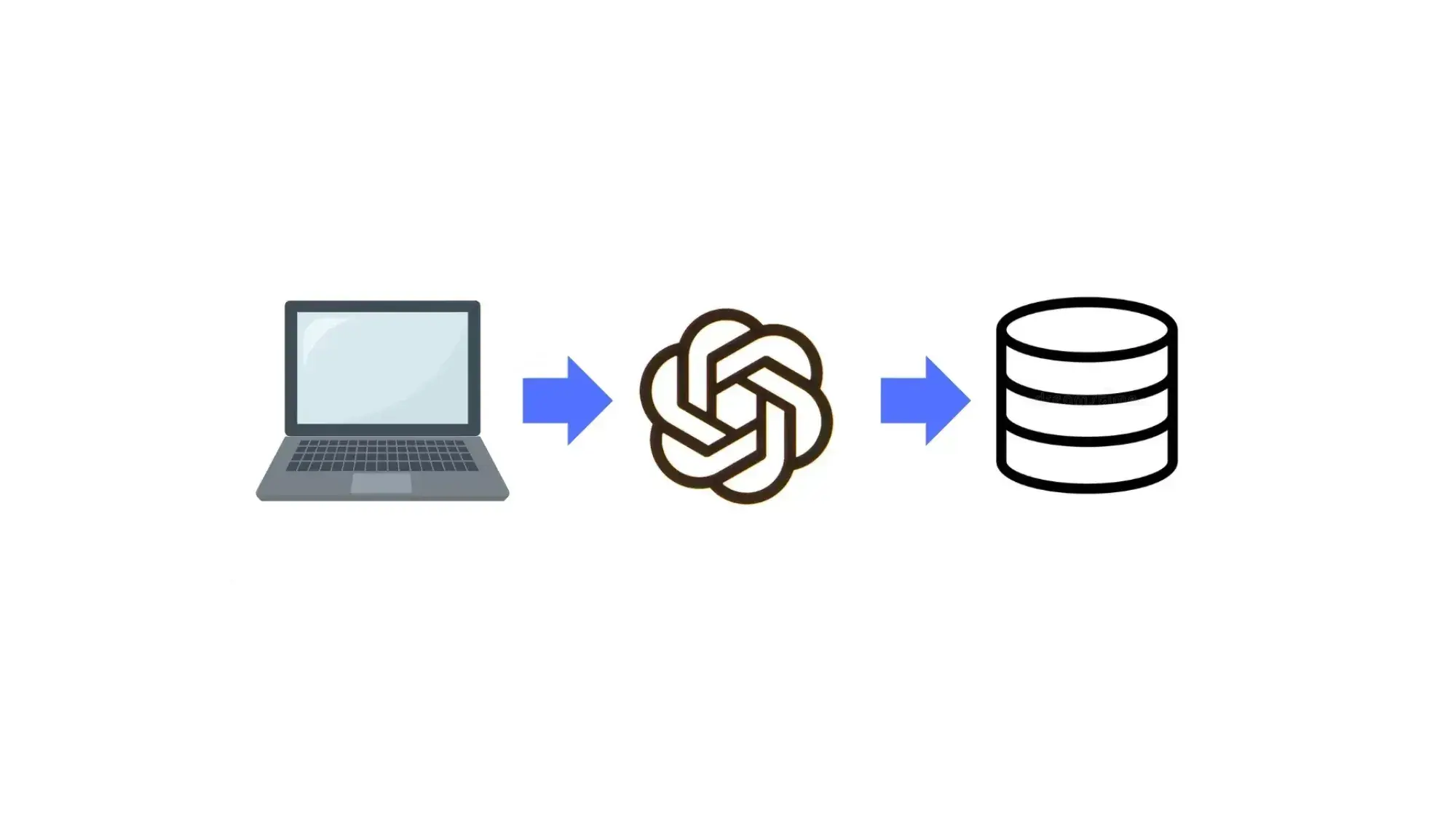
Natural Language Database Lookup System (dbGPT)
We created an intelligent lookup system (using the OpenAI) that can understand natural language prompts and convert them into SQL queries to retrieve the required information from a database.
Our Certifications



AI Chatbot Development for Different Industries
Real Estate
Real estate chatbots qualify property inquiries, recommend relevant listings, answer common questions, arrange viewings, and support tenant or maintenance requests.
Human Resources
HR chatbots answer policy questions, guide onboarding, support leave and benefits requests, collect employee information, and route complex cases to the appropriate team.
Legal Services
Legal chatbots assist with FAQs, initial intake, document guidance, appointment scheduling, and form submissions while directing sensitive matters to authorized professionals.
Banking and Finance
AI chatbots support product inquiries, application guidance, account questions, payment requests, document submissions, and routine service needs, with escalation for sensitive cases.
Healthcare
Healthcare chatbots support appointment scheduling, patient FAQs, service navigation, intake guidance, and routine administrative requests while applying appropriate privacy and access controls.
Retail and E-Commerce
E-commerce chatbots help shoppers find products, compare options, check availability, track orders, submit return requests, and access support throughout the buying journey.
Our AI Chatbot Development Process
Each project follows a structured process that connects business requirements with reliable conversational AI. We move from chatbot strategy and knowledge preparation to development, validation, deployment, and optimization.
Define the Chatbot Strategy
The process begins by identifying the chatbot’s users, business objectives, priority use cases, supported channels, and success criteria. Existing workflows, integration requirements, security needs, and human-escalation conditions are also reviewed before the project scope is finalized.
Prepare Knowledge and Data
Relevant documents, FAQs, policies, product information, databases, and operational data are reviewed for chatbot use. The selected sources are organized and validated, while access permissions, update methods, and retrieval requirements are defined.
Design Conversations and Architecture
User intents, dialogue paths, fallback responses, system actions, and escalation flows are mapped into a clear conversational experience. The supporting architecture, language model, retrieval approach, hosting environment, integrations, and security controls are also selected at this stage.
Build and Integrate the Chatbot
The conversational interface, business logic, LLM workflows, retrieval components, and administrative controls are developed according to the approved design. Required APIs, databases, CRM platforms, help desks, websites, communication channels, and other systems are connected during this phase.
Validate and Prepare for Launch
The chatbot is evaluated for response relevance, knowledge accuracy, conversation flow, permissions, connected actions, fallback behavior, performance, and human handoffs. Identified issues are resolved before the solution is approved for production use.
Deploy and Optimize
After validation, the chatbot is deployed to the selected channels and monitored in the live environment. Conversation data, unresolved questions, failed workflows, and changing business information guides us to make ongoing improvements for desired responses, knowledge retrieval, and integrations.
Technologies Use for AI Chatbot Development Services
- Python
- LangChain
- FastAPI
- OpenAI
- Google Vertex AI
- Botpress
- Twilio / Whatsapp APIs
- Dialogflow
- Docker
- Ollama
- LangGraph
- Amazon Bedrock
- Llama CPP
- Gemini
- ChatGPT
- ChatGPT based chatbots
- Prisma
- Render
Why Choose Data Prism for AI Chatbot Development
Reliable chatbot delivery needs much more than selecting a model and creating a chat interface. Our developers and AI engineers combine conversational design, business-system integration, data preparation, structured testing, and ongoing refinement to build chatbots that perform reliably in real operating environments.
Conversational AI Expertise
Chatbot performance depends on how well language models, prompts, retrieval logic, and conversation flows work together. Our AI engineers design these components as one connected system so responses remain relevant to the intended users and tasks.
Integration-Led Engineering
A chatbot has limited value when it cannot access the systems where customer, sales, or operational information is stored. Our developers plan integrations early, helping the solution work effectively with existing applications, APIs, databases, and workflows.
Business Data Readiness
Incomplete, outdated, or poorly organized information can weaken chatbot responses. Our data specialists prepare knowledge sources, define retrieval requirements, and establish update rules so the chatbot can use business information more reliably.
Controlled Chatbot Behavior
AI-generated responses require clear boundaries for unsupported questions, sensitive actions, and low-confidence situations. Our team implements permissions, fallback logic, escalation paths, and action controls according to the risk of each use case.
Thorough Conversation Testing
A chatbot may perform well in standard demonstrations but fail when users phrase questions differently or follow unexpected paths. Our developers test alternative wording, edge cases, system actions, knowledge retrieval, and human handoffs before launch.
Post-Launch Refinement
Real conversations reveal questions, behaviors, and workflow gaps that cannot always be predicted during development. We use interaction data, failed queries, escalation patterns, and changing business information to guide targeted improvements after deployment.

Build a Chatbot That Works With Your Business
Start Your AI Chatbot ProjectOur Clients
From eCommerce brands and logistics providers to fintech startups and data-first SaaS platforms, we help companies around the world make smarter, faster, and more informed decisions through reliable data infrastructure.




















Frequently Asked Questions
Tell us about your project
Share your details and we'll reply within one business day.