Workflow Automation to Connect Manufacturing & Sales

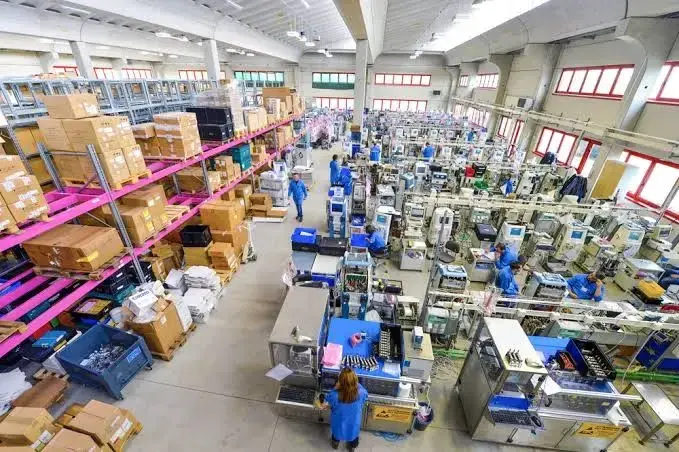
Manufacturing warehouse with workers handling production, inventory, and order fulfillment operations

Overview

Kaemark

Kaemark

Manufacturing and Automation

Challenge

Orders, manufacturing tasks, and operational data were managed across disconnected business systems, making manual coordination and reporting very difficult and time-consuming.

Solution

Built an automation that connects ClickUp, WooCommerce, Google Sheets, and SQL Server into a unified operational workflow.

Google Apps ScriptClick UpWooCommerceNode JsSQL Server
Connected Business Systems

4

Integrated Google Sheets, ClickUp, WooCommerce, and SQL Server into a connected operational workflow

Status Synchronization

24/7

Propagated order and task updates automatically across connected systems using APIs and webhooks

Less Manual Data Entry

50–80%

Reduced repetitive administrative work by automating order processing, task management, and status updates

Client

Kaemark is a US-based manufacturer of professional furniture and equipment serving the beauty, animal health, education, and healthcare industries. The company designs, manufactures, and installs customized solutions for commercial environments across North America. 

With manufacturing, ecommerce, fulfillment, and project management operating across multiple business systems, Kaemark relies on efficient operational processes to coordinate orders from production through delivery. As the business continued to grow, maintaining consistency between these systems became increasingly important for supporting day-to-day operations. 

Challenge

Business operations were scattered across several independent systems for order management, manufacturing, project tracking, and reporting. Keeping information synchronized across these platforms requires repetitive manual work and increased the risk of inconsistent operational data. 

Key Issues 

  • Synchronizing order information across multiple business systems 
  • Creating and updating ClickUp tasks based on operational data 
  • Keeping manufacturing and fulfillment workflows aligned 
  • Propagating order status changes between WooCommerce and ClickUp 
  • Managing large spreadsheet operations within Google Apps Script execution limits 
  • Maintaining reliable reporting across operational data sources 

Without a standardized automation framework, operational teams spent unnecessary time coordinating information between disconnected systems. 

Solution

A business workflow automation was developed to connect operational systems and streamline order processing, manufacturing coordination, and business reporting. 

Connected Business Systems 

Google Apps Script was used to integrate Google Sheets with ClickUp to synchronize the flow of information. For example, it was used to create project tasks, update custom fields, and support manufacturing and fulfillment activities. On the other hand, WooCommerce and WordPress integrations were used to sync ecommerce operations with project management workflows. 

Workflow Synchronization 

PHP webhooks propagated order status updates between WooCommerce and ClickUp. Implemented automations ran on a schedule to ensure project information remained consistent across connected systems. This reduced manual coordination and improved workflow continuity. 

Operational Reporting 

Node.js synchronization was used to transfer operational data between Google Sheets and SQL Server. This helped to create a centralized reporting foundation for manufacturing, logistics, sales, and business operations. 

Workflow Reliability 

Batch processing, validation, archive management, and automated notifications improved the reliability of operational workflows while addressing Google Apps Script execution limits and reducing synchronization failures.

Key Deliverables 

  • Built a synchronized business workflow automation, combining multiple tools and systems 
  • Connected ClickUp, WooCommerce, Google Sheets, and SQL Server 
  • Automated ClickUp task creation and custom field synchronization 
  • Implemented real-time order status synchronization using webhooks 
  • Developed Node.js utilities for SQL reporting synchronization 
  • Added batch processing to improve workflow reliability 
  • Implemented validation, archive management, and automated notifications 

Tools Used

The following technologies powered business automation, system integration, and operational reporting.

  • JavaScript
  • Google Apps Script
  • Node Js
  • PHP
  • Click Up
  • WooCommerce
  • Google Sheets
  • Webhooks
  • Rest

Results

Accelerated Business Operations 

Automated order processing, task creation, and status synchronization reduced the time required to move work between sales, manufacturing, and fulfillment teams. 

Improved Data Consistency 

Real-time synchronization reduced duplicate records, inconsistent updates, and manual reconciliation across connected business systems. 

Better Cross-Team Visibility 

Sales, production, and fulfillment teams worked from the same operational data, improving coordination throughout the order lifecycle. 

Scalable Automation Foundation 

Established a reusable integration framework capable of supporting additional workflows, without increasing manual operational effort. 

Impact

Helped the company to scale aggressively in 3 years' time by connecting orders, manufacturing, and reporting workflows.

Business Impact 

  • Reduced manual data entry by automating repetitive operational tasks  
  • Improved data consistency across ClickUp, WooCommerce, Google Sheets, and SQL Server  
  • Increased visibility for sales, production, and fulfillment teams  
  • Reduced administrative effort required to manage order and task updates  
  • Created a scalable workflow capable of supporting future business growth 
Book Consultation