

Introduction
How to Choose a Data Pipeline Tool?
10 Best Data Pipeline Tools in 2026
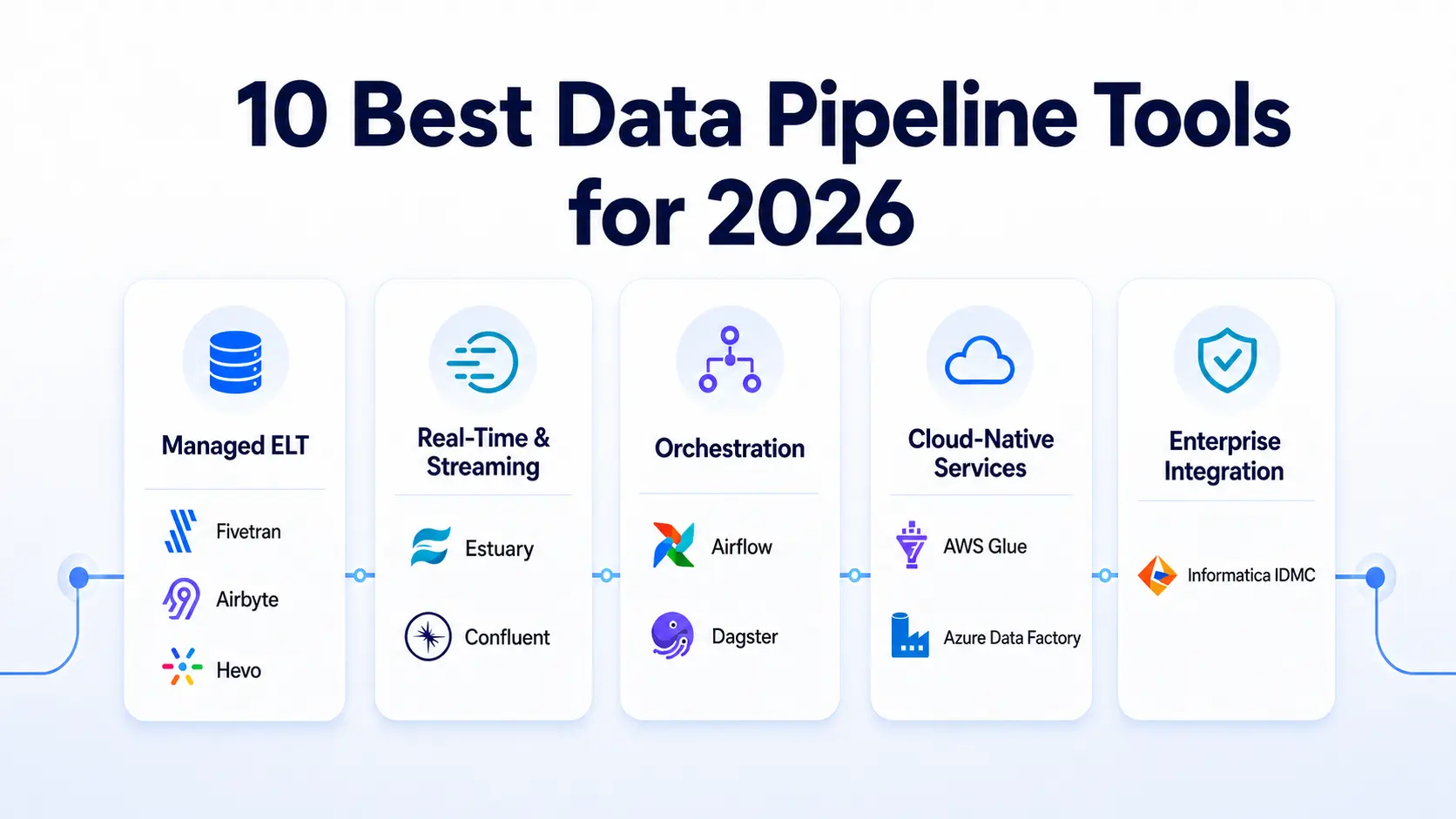
The 10 tools below are organized into the five categories in the table. Each category introduction explains what its tools can replace and where they have limitations.
Managed ELT Platforms
Managed ELT platforms move data from SaaS apps and databases into a warehouse on a schedule. The vendor maintains the connectors, so your team doesn’t have to. Fivetran, Airbyte, and Hevo are genuine substitutes for each other, so the choice comes down to pricing model and engineering capacity.
1. Fivetran
Best for: Teams that want fully managed connectors and can absorb usage-based billing.
Fivetran is the biggest name in managed ELT, with more than 700 connectors. Log-based CDC covers the major databases, and the Enterprise tier syncs every minute. Beyond the product, Fivetran’s corporate structure changed on June 1, 2026, when its merger with dbt Labs completed. This deal put ingestion and dbt transformations under one vendor, which now serves more than 100,000 data teams.
Pros:
- The most reliable connectors in the category, with near-zero maintenance
- Ingestion and transformation now ship from one vendor (post merger with dbt)
Cons:
- Monthly Active Rows (MAR) billing is hard to predict. The January 2026 changes ($5 minimum per connection, deletes now count) raised many bills by 40% to 70%
- Transformations and reverse ETL run on separate meters, so the headline rate understates the bill
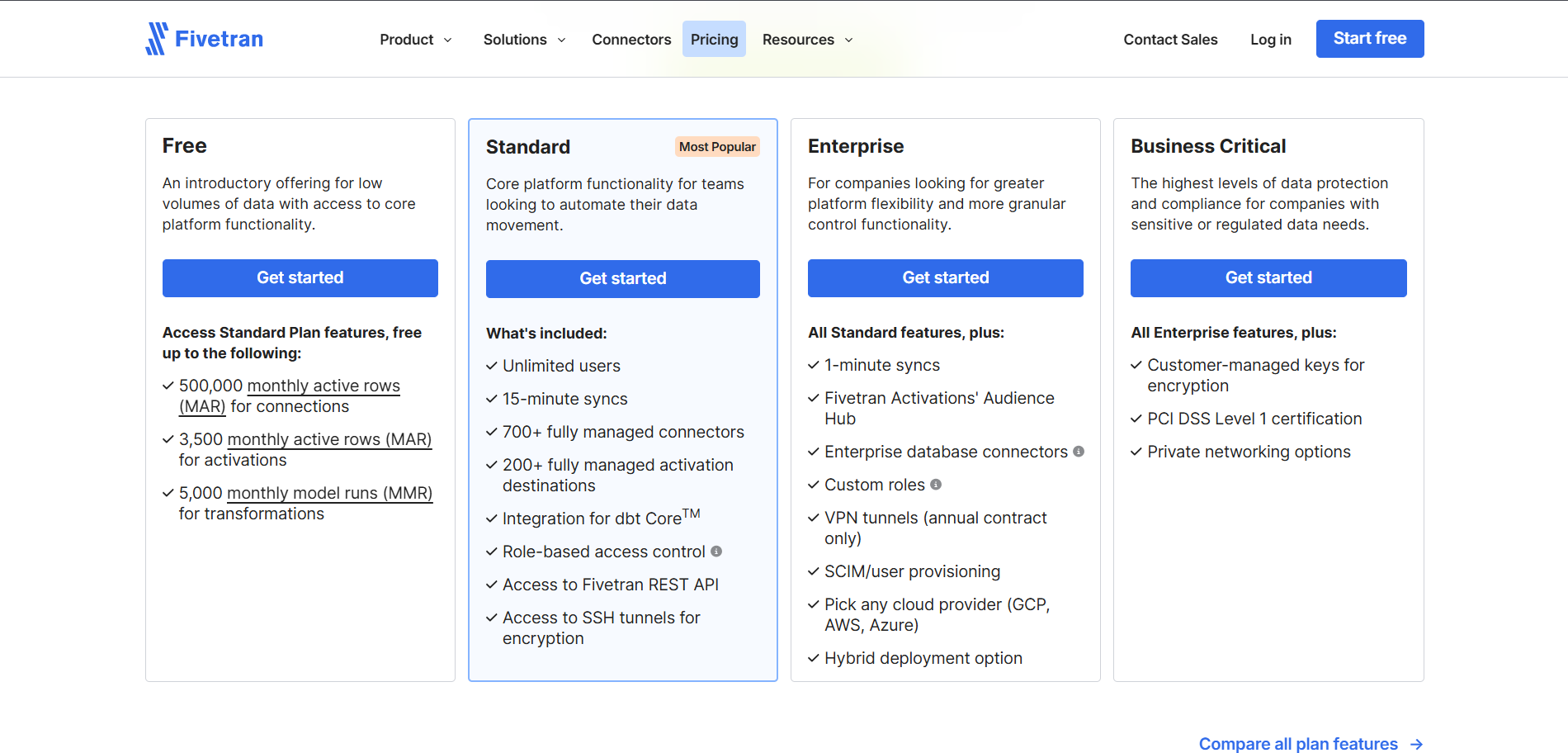
Pricing: Usage-based on MAR per connector, free up to 500,000 monthly active rows. Current rates are on Fivetran’s pricing page.
Our Assessment: Fivetran is still the strongest managed ELT product and the weakest on cost predictability. Model your MAR before committing.
2. Airbyte
Best for: Engineering teams that want open-source flexibility with a managed option.
Airbyte is the leading open-source data integration platform, with more than 600 connectors. A low-code builder handles anything the catalog misses. Its destinations cover warehouses, lakes, and vector stores for AI workloads. Airbyte 2.0 shipped in October 2025, and development remains among the most active in data engineering.
Pros:
- The largest open connector catalog, at no license cost when self-hosted
- Capacity-based Data Workers pricing on Plus and Pro caps the volume-spike risk
Cons:
- Connector quality varies, so alpha and beta connectors need testing before production
- Self-hosting typically costs $500 to $3,000 a month in infrastructure, plus 20 to 40 engineering hours
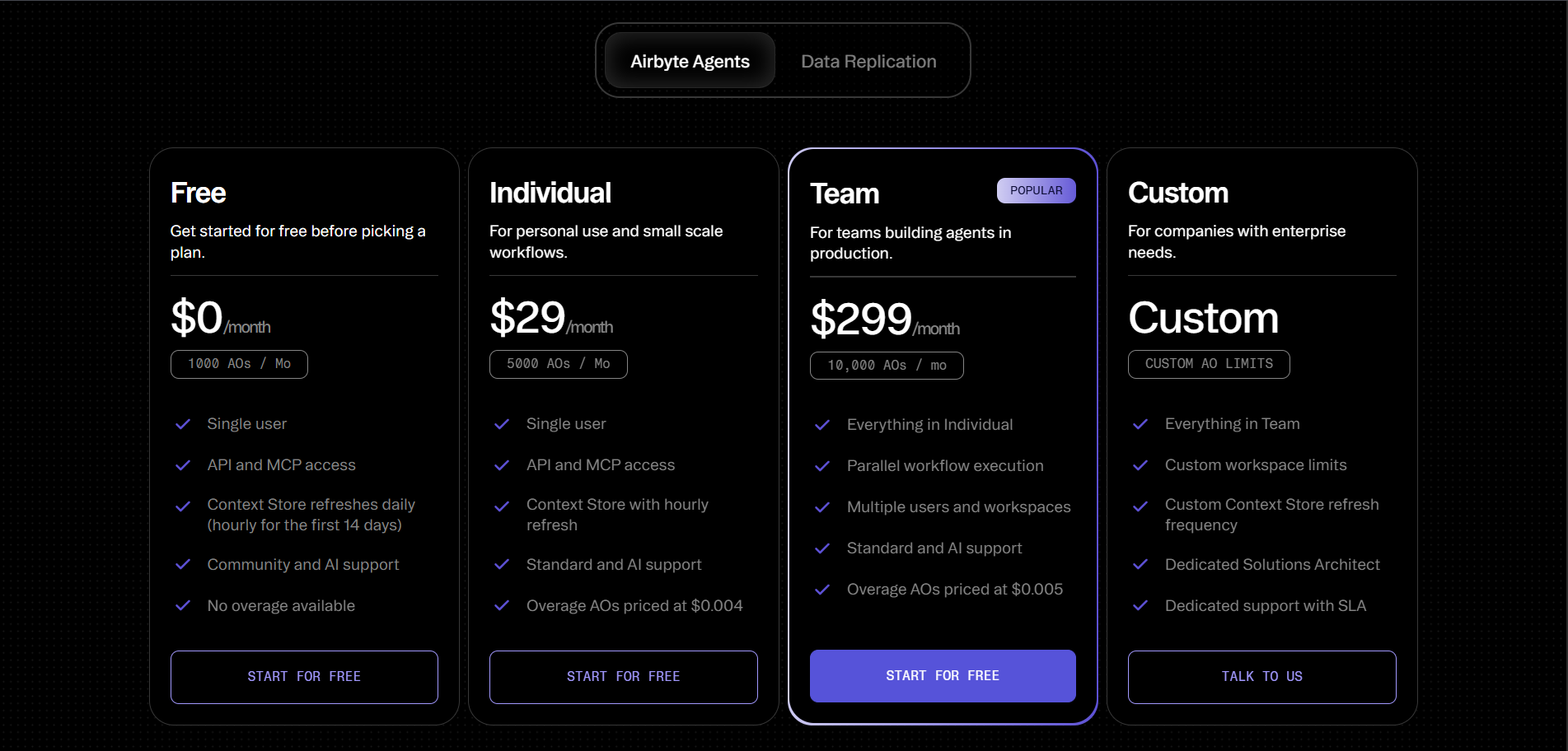
Pricing: Core is free to self-host. Cloud Standard starts at $10 a month on usage credits, while capacity-based Plus plans begin around $500. Full details are on Airbyte’s pricing page.
Our Assessment: Airbyte is the best open-source data pipeline tool for ELT work, provided you budget the operational overhead honestly. The free tier is real, but the cost lands on your payroll instead.
3. Hevo Data
Best for: Small teams that want no-code pipelines with predictable, tiered pricing.
Hevo Data is a fully managed, no-code ELT platform with more than 150 connectors and automated schema mapping. Analysts can build data pipelines through the interface alone, which makes Hevo the fastest of the three managed platforms in the list.
Pros:
- The easiest setup in this category, with pipelines live in minutes
- Tiered event pricing is simpler to forecast than MAR
Cons:
- Every insert, update, or delete counts as an event, so a row updated five times bills five times
- Overages are metered without a cap, so a busy month has no predictable ceiling
- No self-hosted option, and a smaller connector catalog than Fivetran or Airbyte
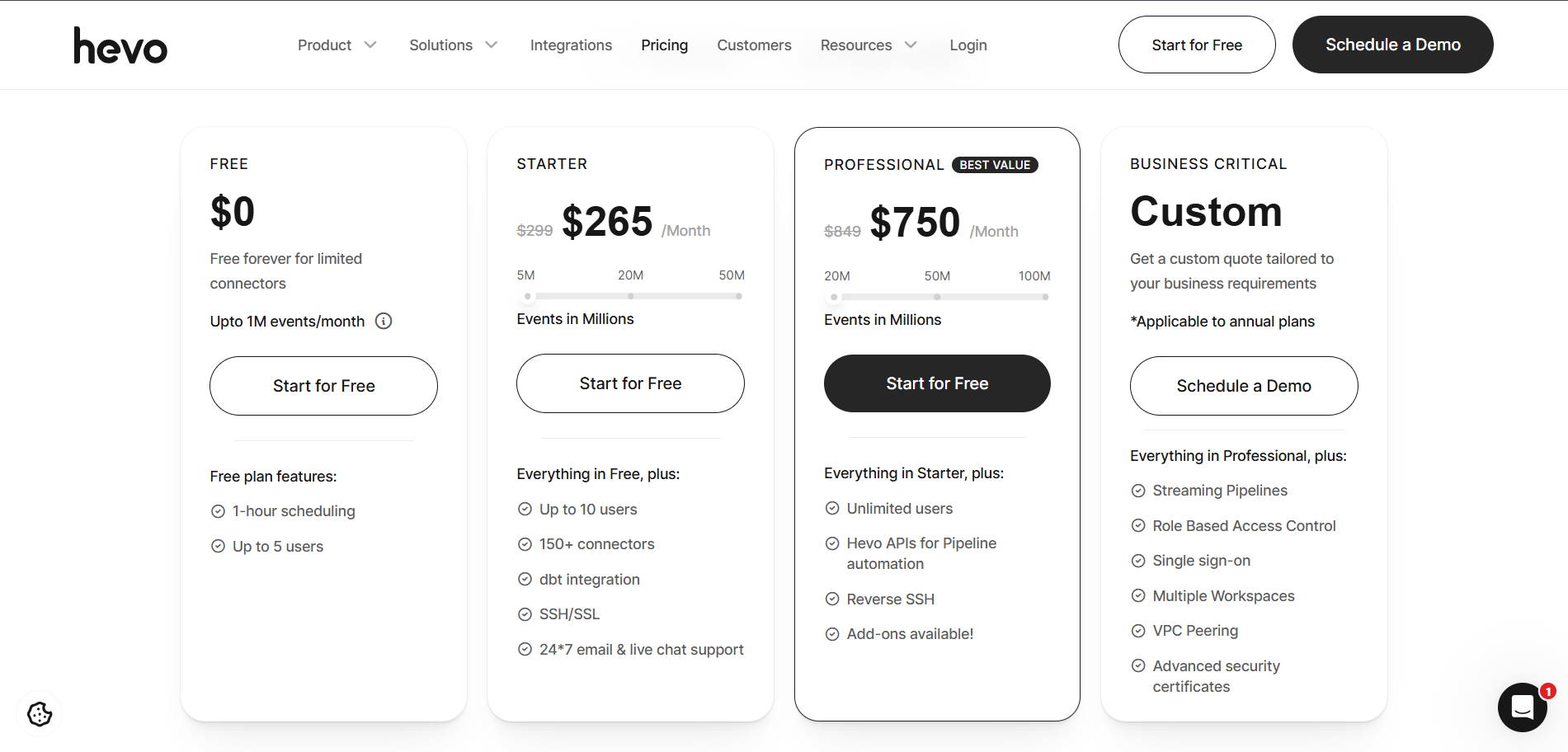
Pricing: Free up to 1 million events a month. Starter begins at $239 a month with 5 million events, and Professional at $679. Business pricing is quoted per customer. Current tiers are on Hevo’s pricing page.
Our Assessment: Hevo wins on speed to value and loses on scale. It’s the ideal first pipeline tool for many companies and the wrong last one for high-change-rate data.
Real-Time and Streaming Platforms
Streaming platforms move data continuously instead of on a schedule. They aren’t substitutes for the ELT tools above. A team that needs sub-second inventory sync and nightly finance reports will often run one of each.
4. Estuary
Best for: Real-time CDC pipelines without the cost of running Kafka.
Estuary unifies CDC, streaming, and batch pipelines in one managed service. The platform delivers sub-100ms latency, exactly-once delivery, and more than 200 connectors.
Kafka API compatibility also means existing consumers plug in without running a Kafka cluster of your own. You can dial each pipeline’s latency up or down instead of buying a separate tool for each speed.
Pros:
- One platform covers real-time and batch, which removes a whole tool from the stack
- GB-based pricing beats row-based pricing at high change volumes
Cons:
- Check that Estuary supports your required sources and destinations
- Transformations use SQL or TypeScript and carry a learning curve
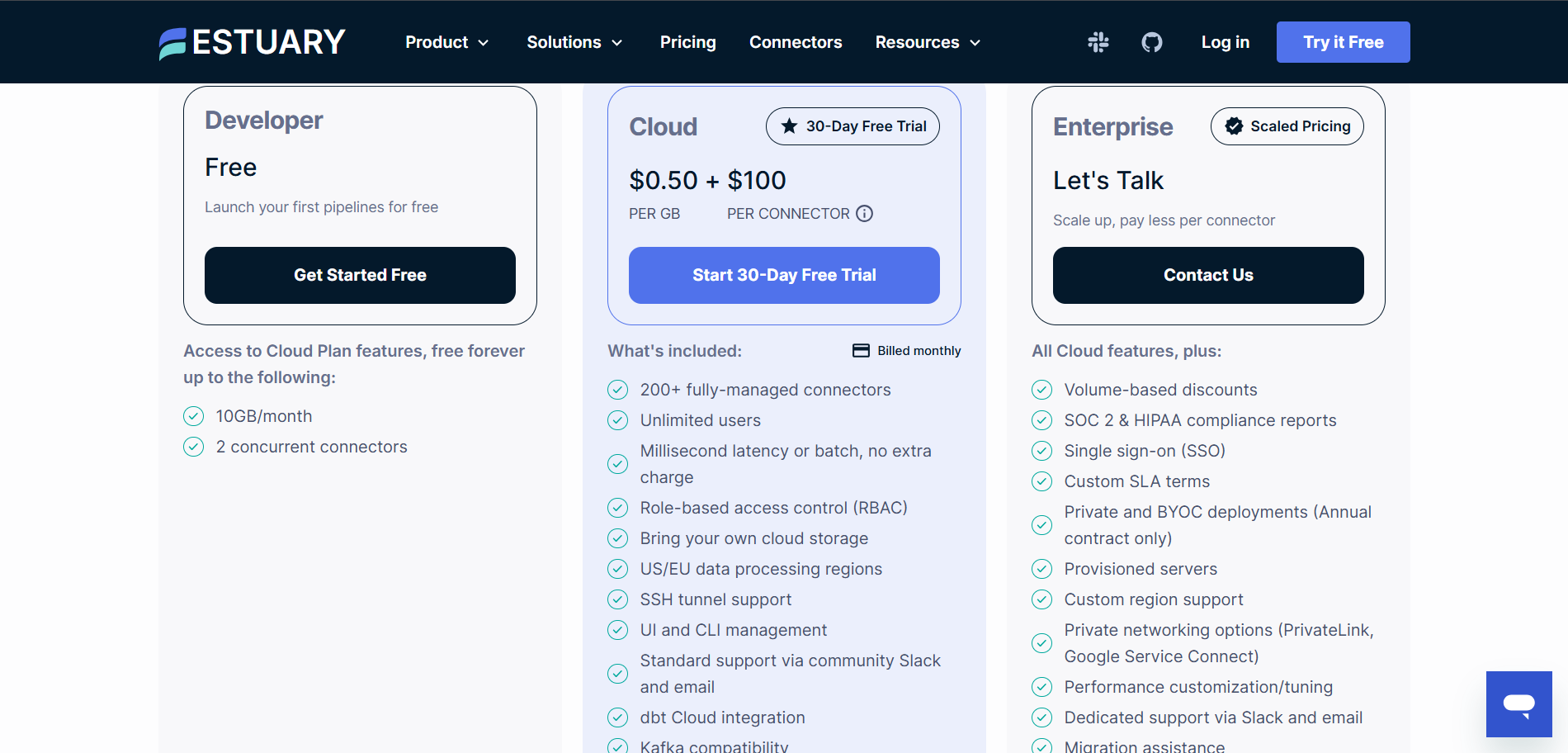
Pricing: Free up to 10 GB a month across two connectors, then $0.50 per GB of change data moved plus $0.14 per connector hour. See Estuary’s pricing page for current rates.
Our Assessment: Estuary is the strongest pick for real-time data pipelines below enterprise scale. Its pricing rewards exactly the workloads that punish MAR billing.
5. Confluent
Best for: Enterprises building an event streaming backbone.
Confluent is the commercial platform built around Apache Kafka, extended with managed Flink stream processing and Tableflow. Tableflow turns Kafka topics into analytics-ready Iceberg or Delta Lake tables. The platform’s ownership changed on March 17, 2026, when IBM completed its acquisition of Confluent in an $11 billion deal.
Pros:
- The de facto standard for event streaming, used by more than 6,500 enterprises
- Kafka, Flink, and lakehouse delivery in one governed platform
Cons:
- Overkill for batch analytics, which simpler tools solve cheaper
- IBM ownership raises roadmap and pricing questions that won’t resolve for a few quarters
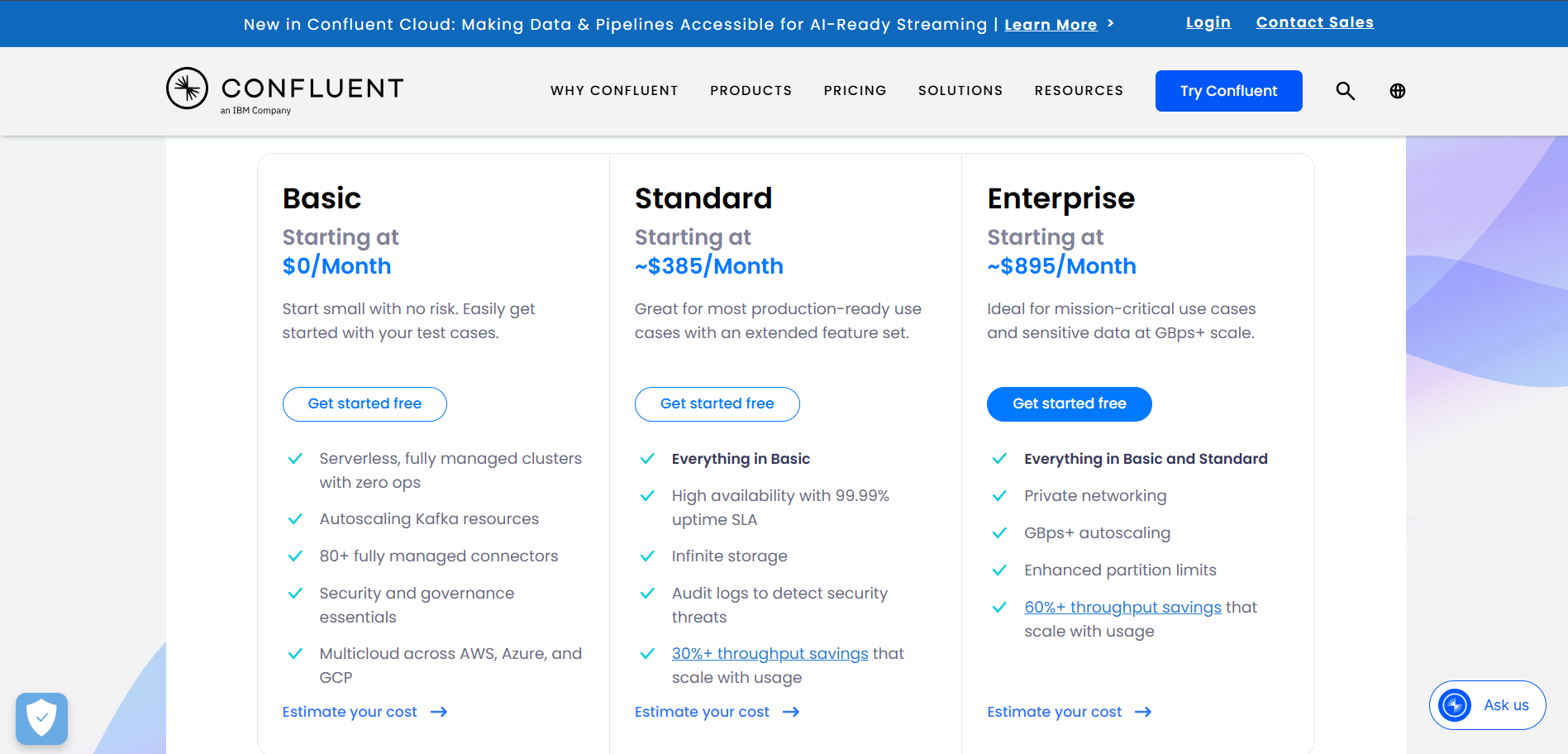
Pricing: Usage-based across cluster type, throughput, storage, and Flink compute, with a pay-as-you-go entry and custom enterprise commitments. See Confluent’s pricing page for the full breakdown.
Our Assessment: Nothing matches Confluent for event streaming at scale, but treat it as infrastructure, not as an ELT replacement. Buying it for nightly warehouse loads is buying a freight train for a grocery run.
Workflow Orchestration Platforms
Orchestrators don’t move data themselves. They coordinate the tools that do, deciding what runs, in what order, and what happens on failure. Every serious pipeline stack has one, usually alongside tools from the other categories.
6. Apache Airflow
Best for: Teams standardizing on the industry’s default orchestrator.
Apache Airflow is the open-source standard for data pipeline orchestration, with workflows defined as Python DAGs. Airflow 3.0 rebuilt the platform in April 2025 around DAG versioning and event-driven scheduling. Airflow 3.3 followed on July 6, 2026, adding a task state store plus Java and Go task SDKs.
Pros:
- The largest community in the category, with 30 million monthly downloads across roughly 80,000 organizations
- Orchestrates anything that exposes an API
- Managed options through Amazon MWAA, Google Cloud Composer, and Astronomer
Cons:
- Self-hosting means running a scheduler, workers, and a metadata database
- It moves no data itself, so budget for an ingestion tool alongside it
Pricing: Free and open source. Managed services bill on underlying compute.
Our Assessment: Airflow 3 fixed the platform’s biggest structural complaints and its community size makes it the safest default.
7. Dagster
Best for: Teams that think in data assets rather than tasks.
Dagster is an open-source orchestrator built around data assets, the tables, files, and models a pipeline produces. Airflow, by contrast, models the tasks that produce them. This asset view brings lineage and observability in by default. First-class dbt integration maps models to assets, which suits modern warehouse stacks.
Pros:
- The asset model mirrors how modern ELT-plus-dbt stacks actually work
- A far better local development and testing experience than Airflow
Cons:
- A much smaller community and hiring pool than Airflow
- Migrating existing Airflow DAGs is a real project, not a weekend job
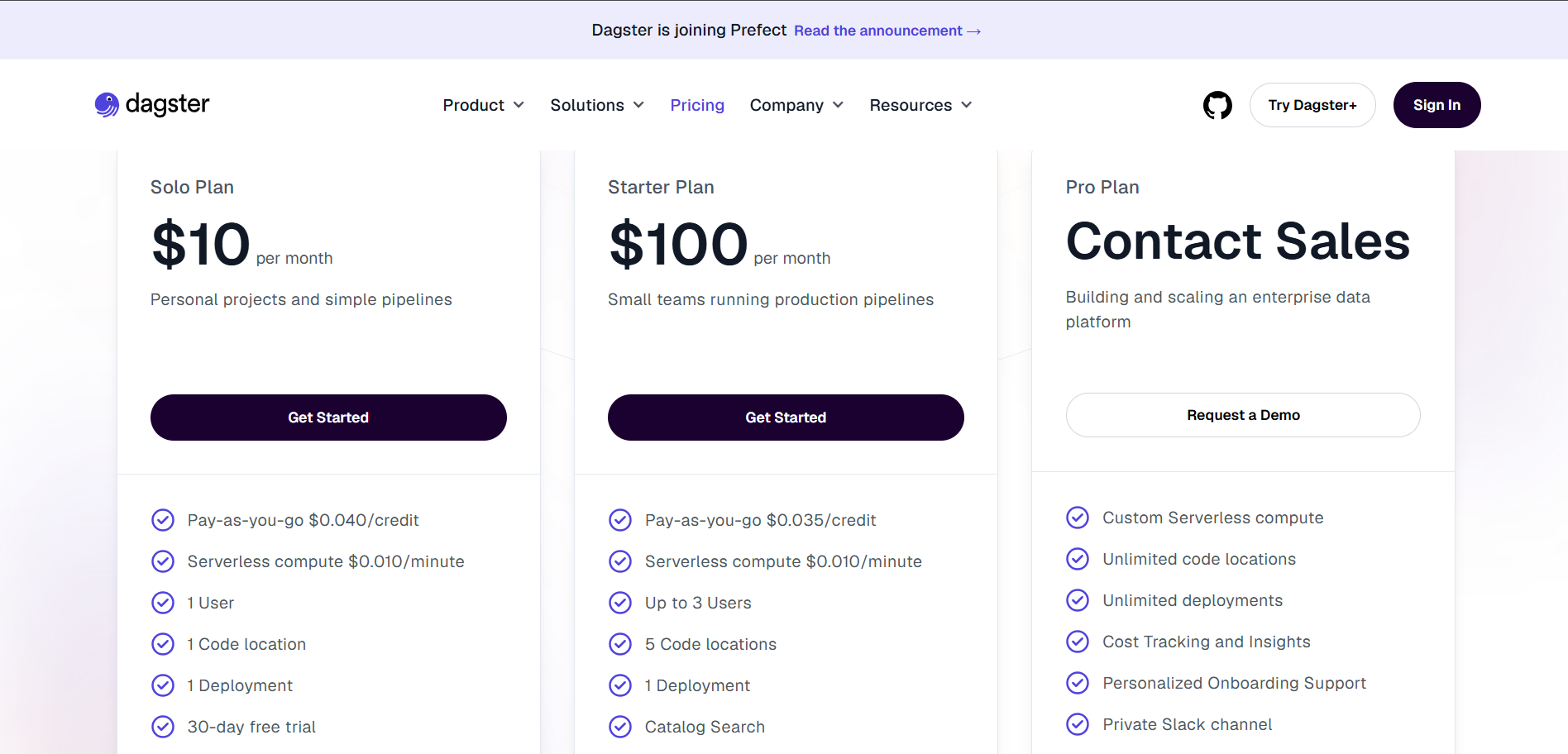
Pricing: Open source is free. Since May 1, 2026, Dagster+ Solo costs $10 a month plus $0.040 per credit. Starter costs $100 a month plus $0.035 per credit, and Pro is quoted per customer.
Our Assessment: Dagster is the better-designed tool (but Airflow is the safer bet). However, greenfield teams should always look here first.
Cloud-Native Pipeline Services
Cloud-native services trade portability for integration. They’re the easiest option inside one cloud and a liability the moment you need to leave it.
8. AWS Glue
Best for: Serverless ETL inside an AWS-centric stack.
AWS Glue is Amazon’s serverless data integration service, running Spark-based ETL jobs without any cluster management. It bundles a data catalog with automated crawlers and a visual job builder in Glue Studio. Streaming ETL jobs also cover Kinesis and Kafka sources.
Pros:
- No infrastructure to run, with per-second billing and native ties to S3, Redshift, and Athena
- Flex execution cuts job costs by about a third for non-urgent batch work
Cons:
- AWS-only, which is the point and the problem
- SaaS connectors are far behind the dedicated ELT platforms
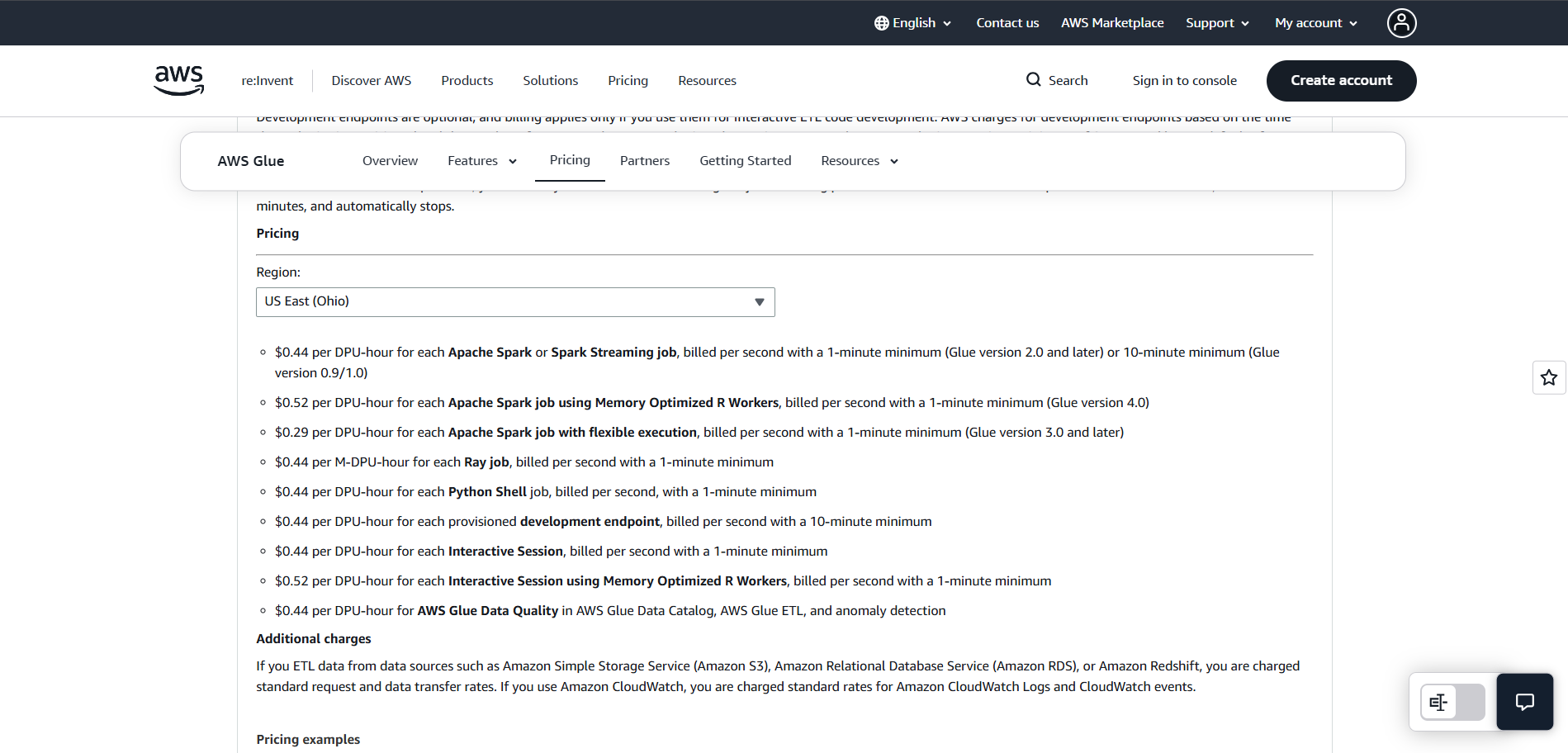
Pricing: ETL jobs bill at $0.44 per DPU-hour (4 vCPUs and 16 GB of memory), metered per second with a 1-minute minimum. Flex execution drops that to $0.29.
Our Assessment: Glue is very good at lake-side ETL on AWS and mediocre at everything else. Pair it with an ELT tool for SaaS sources.
9. Azure Data Factory
Best for: Data integration across Microsoft-centric estates.
Azure Data Factory (ADF) is Microsoft’s cloud data integration service. It offers visual pipeline design, more than 90 connectors, and Spark-backed mapping data flows for transformations. A self-hosted integration runtime reaches on-premises systems, and ADF also underpins the pipeline experience inside Microsoft Fabric.
Pros:
- The natural choice when your warehouse, identity, and contracts already live in Azure
- Hybrid connectivity to on-premises SQL Server estates is a real advantage
Cons:
- Pricing spreads across several meters (activity runs, integration units, data flow compute), so bills take effort to predict
- Real-time work needs Event Hubs or Stream Analytics alongside it
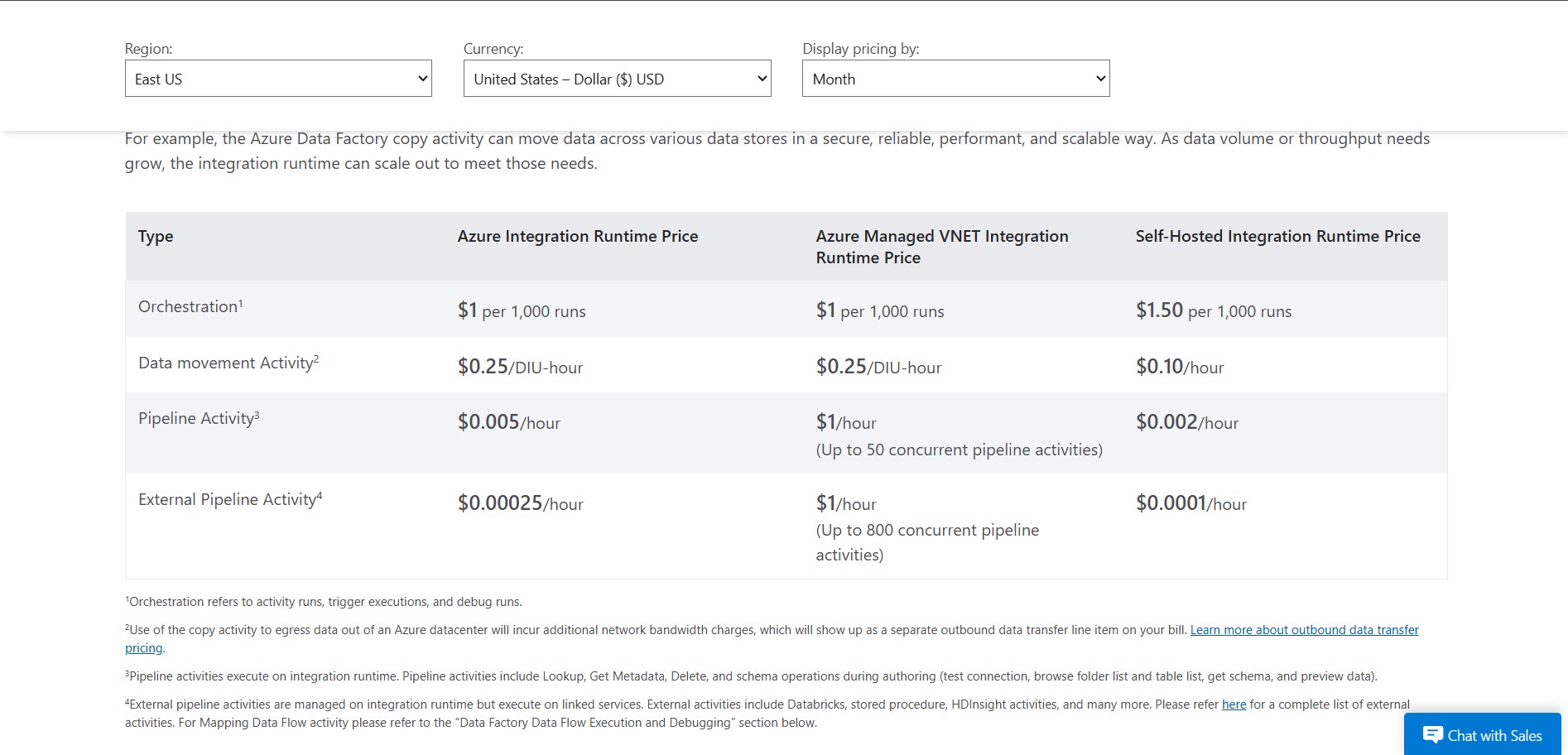
Pricing: Pay-per-use, at roughly $1 per 1,000 activity runs plus $0.25 per data integration unit-hour for data movement. Full details are on Microsoft’s Data Factory pricing page.
Our Assessment: ADF is the right answer to a specific question: how do I build pipelines when everything else is Microsoft? Outside that context, the dedicated platforms above do the same work with less friction.
Enterprise Data Integration Platforms
Enterprise platforms bundle integration with governance, data quality, and master data management. They compete on trust and compliance more than on pipeline speed.
10. Informatica IDMC
Best for: Governed data integration in large, regulated enterprises.
Informatica’s Intelligent Data Management Cloud (IDMC) combines data integration, quality, governance, catalog, and master data management in one platform. Its CLAIRE engine applies AI across all of it, and Informatica has a new owner too. Salesforce completed its acquisition on November 18, 2025.
Pros:
- Governance and compliance depth no other tool on this list matches
- Connectivity into legacy and on-premises systems that younger vendors skip
Cons:
- Custom IPU consumption pricing makes costs opaque until you’re deep in a sales cycle
- Salesforce ownership will pull the roadmap toward the Salesforce stack, which helps some customers and worries others
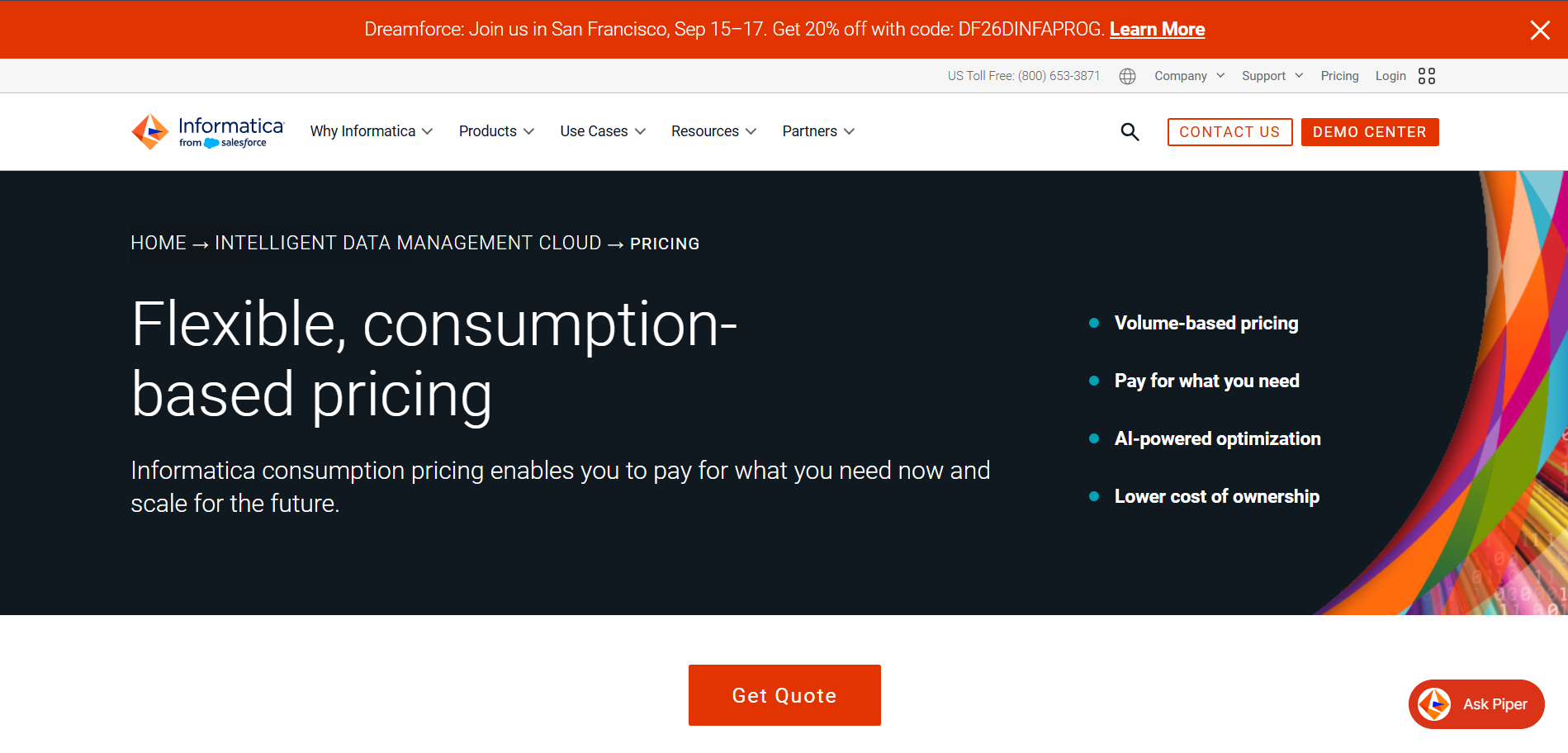
Pricing: Consumption-based through Informatica Processing Units (IPUs), quoted per customer. The model is described on Informatica’s pricing page.
Our Assessment: For a 50-person startup, IDMC is the wrong tool at any price. For a regulated enterprise consolidating hundreds of systems, it’s still one of very few credible options.
Which Data Pipeline Tool for Which Use Case?
Which Data Pipeline Tool Should You Choose in 2026?
Conclusion
Book a Free 30-Minute Meeting
Discover how our services can support your goals — no strings attached. Schedule your free 30-minute consultation today and let's explore the possibilities.
Book a Free Call