

What Data Warehouse Consulting Really Is (and What It Is Not)

Usman AshrafJun 19, 2026
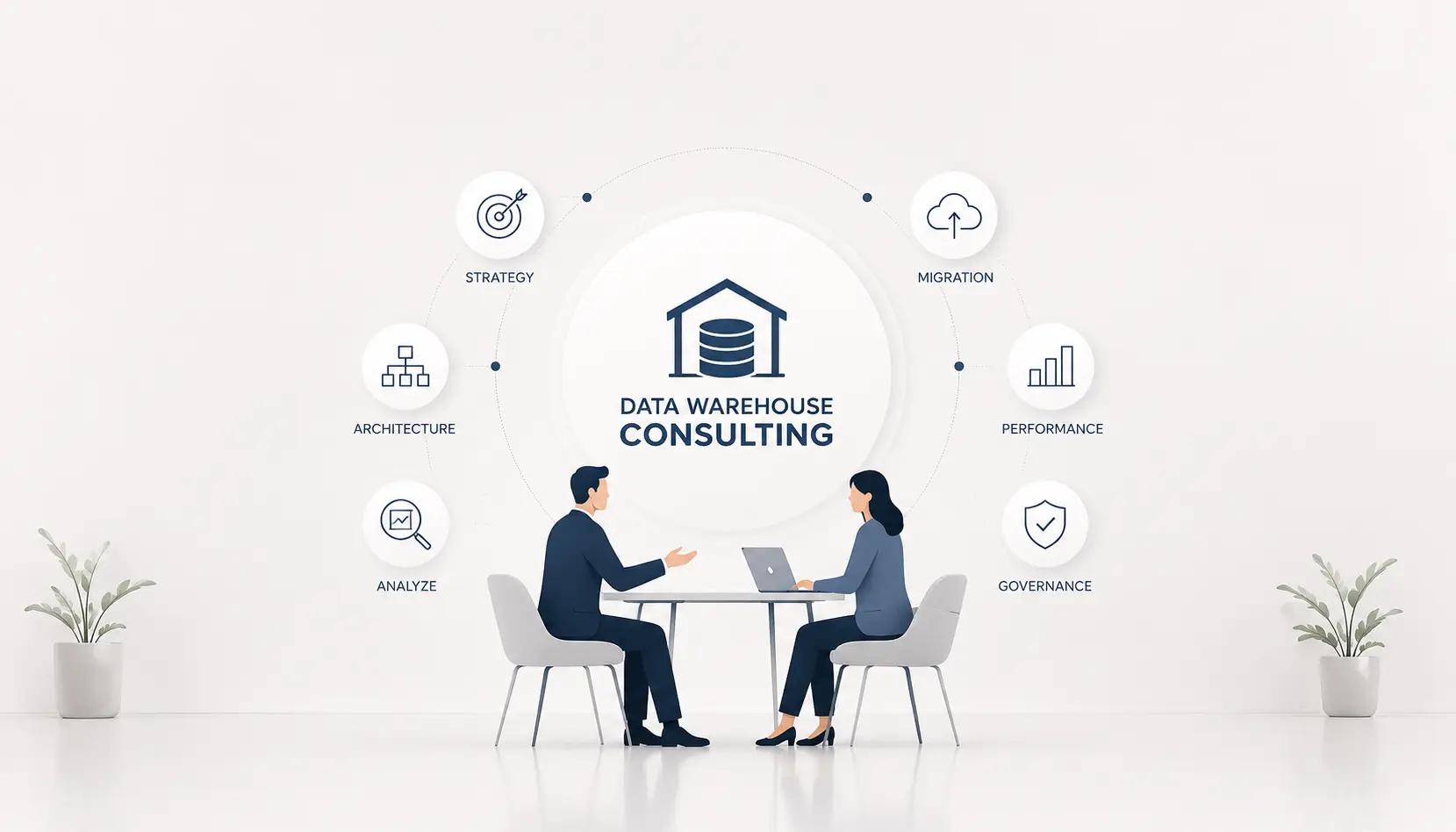
Data warehouse consultants discussing strategy, architecture, migration, performance, governance, and analysis.

Introduction

A retail operations team runs its weekly sales report and waits. The query takes most of a workday to finish. Finance has its own version of the same number, and it does not match. The cloud bill climbed again last quarter, and nobody can explain which workload caused it. A migration scoped for three months is now in its ninth. These problems built up over years of bolting one system onto the next.

Data warehouse consulting brings in an outside specialist to design, repair, or modernize the system. A data warehouse consultant studies how information flows from source systems into a central store, finds where it breaks, measures what it costs, and rebuilds it so reporting runs fast and the numbers hold up. The job covers strategy, architecture, migration, and the cleanup that follows.

An IBM study of chief data officers found that more than a quarter of companies lose over $5 million a year to data problems, and 7 percent lose $25 million or more (IBM). Most companies hire a consultant to close that gap and that’s how data warehouse consulting is born.

Why Companies End Up Needing Help

Most companies do not call a consultant when things are calm.They call when a migration has gone sideways. Informatica found that 84 percent of cloud migrations exceed their budget or timeline (Cortex). McKinsey reported that 75 percent of cloud migrations ran over budget and 37 percent finished late, and IDC put the average overrun at 23 percent above plan (IDC). A company in that position starts looking for outside help.

The symptoms look the same across industries. Reports that once took minutes now take hours. Two teams pull the same metric and get two answers. The monthly cloud invoice keeps growing while query speed drops. A platform was chosen in a rush and now it’s charging for the compute capacity the business never uses. Data sits in five tools with no single source anyone trusts.

Take a mid-sized insurer that moved its reporting to a cloud warehouse with no sizing plan. It picked a large compute tier to be safe, left it running around the clock, and watched the bill triple in four months. Nothing improved, because the bottleneck was the data model, not the hardware. A consultant who reviews a case like this in a week can find both the wasted spend and the real cause.
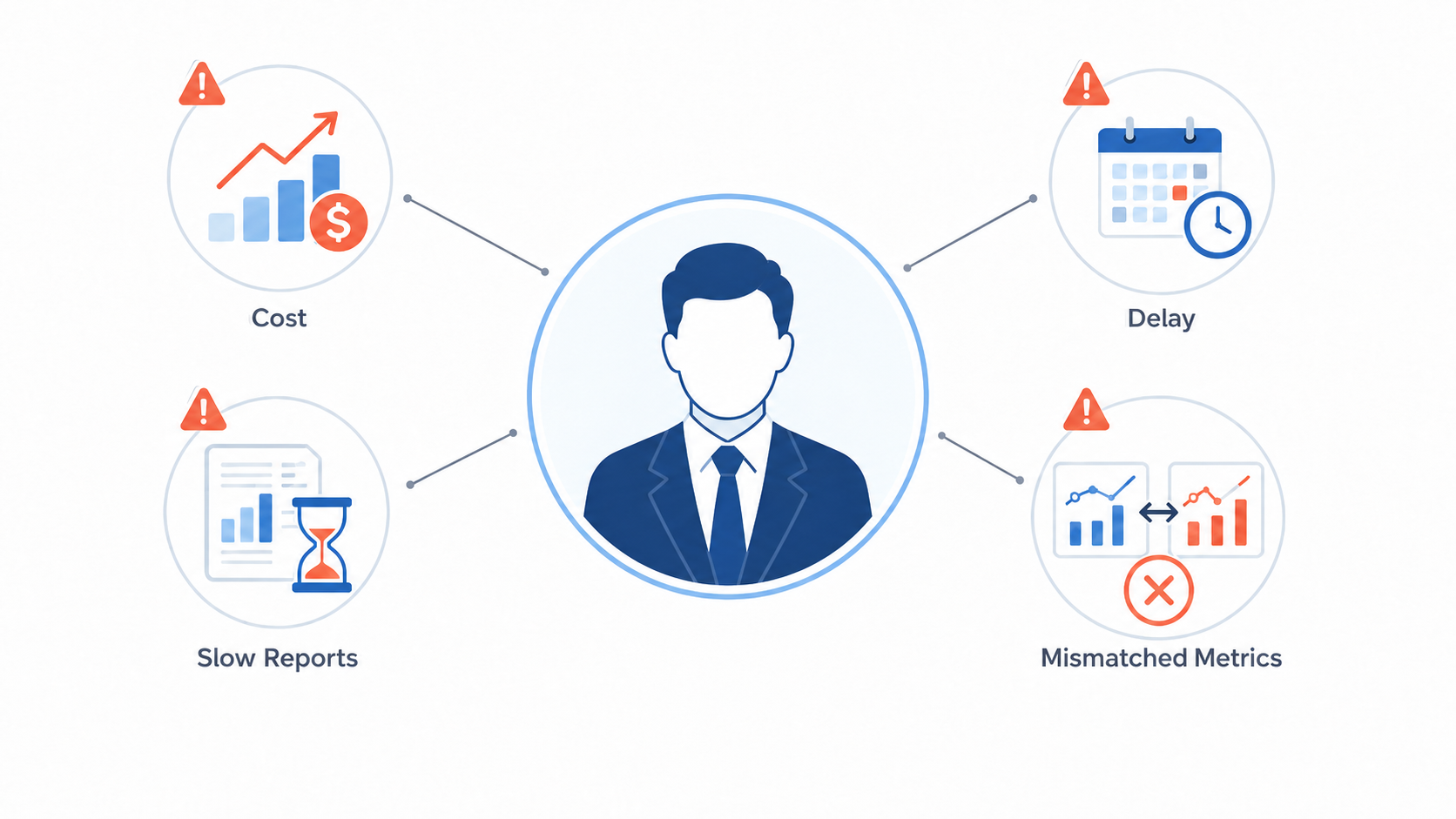
Business leader facing rising costs, project delays, slow reports, and mismatched performance metrics.

What Is a Data Warehouse Consultant?

A data warehouse consultant is a specialist who plans, builds, and tunes the central system a company uses for reporting and analytics.

The day-to-day work is part architect, part plumber, and part translator. The consultant decides how tables should be shaped, builds the pipes that move data into them, and then explains the trade-offs to people who will never open a query editor.

The good ones do not stop at advice. They leave behind documented architecture, working pipelines, and a team that can run the system on its own.

What-Does-a-Data-Warehouse-Consultant-Do?

A data warehouse consultant turns scattered, slow, or expensive data systems into something a business can rely on. The work falls into ten areas, and a single engagement often touches several of them.

Architecture planning 

The consultant designs how data will be stored and organized in the warehouse. They decide how tables are structured, how much detail to keep, and how historical data is tracked. A good design makes reports faster, more reliable, and easier to understand.

Cloud modernization

Many engagements move an aging on-premises warehouse to a cloud platform such as Snowflake, Google BigQuery, Amazon Redshift, or Databricks. Done correctly, this cuts hardware costs and adds room to grow.

Data migration and integration

Moving data is where projects fail. The consultant maps old fields to new ones, checks that nothing is lost, and connects the warehouse to the CRM, finance, and product system.

Vendor and platform selection

Picking the wrong platform is costly to undo. A consultant matches the platform to the workload, the budget, and the skills the team already has, instead of following the loudest sales pitch.

Governance, security, and performance

This covers who can see what, how sensitive data is protected, and how queries are tuned so the system stays fast and the bill stays predictable.

Data quality management

Bad data leads to bad decisions. The consultant creates rules and checks to catch missing, duplicate, or incorrect records before they reach reports. This helps teams trust the numbers they see.

Reporting and KPI design

The consultant works with stakeholders to define key metrics, standardize calculations, and make sure everyone uses the same definitions for revenue, customers, churn, and other measures.

Data cataloging and documentation

As systems grow, people forget where data comes from and what it means. The consultant documents datasets, definitions, and data flows so future teams can understand and maintain the warehouse.

Master data management

Many companies hold multiple versions of customer, product, or supplier data. The consultant creates a single, reliable source of truth to cut duplicates and reporting conflicts.

Data pipeline monitoring

Pipelines break more often than most teams expect. The consultant sets up alerts, monitoring, and automated checks so issues surface quickly and reports stay reliable.


Migration and integration sound alike, and teams mix them up, which is one reason projects slip. Migration moves data from an old system into a new one and then retires the old store. Integration keeps several systems running and wires them together so the warehouse always reflects current numbers. A consultant will say which one you need, because the plans, the costs, and the risks differ a lot between them.
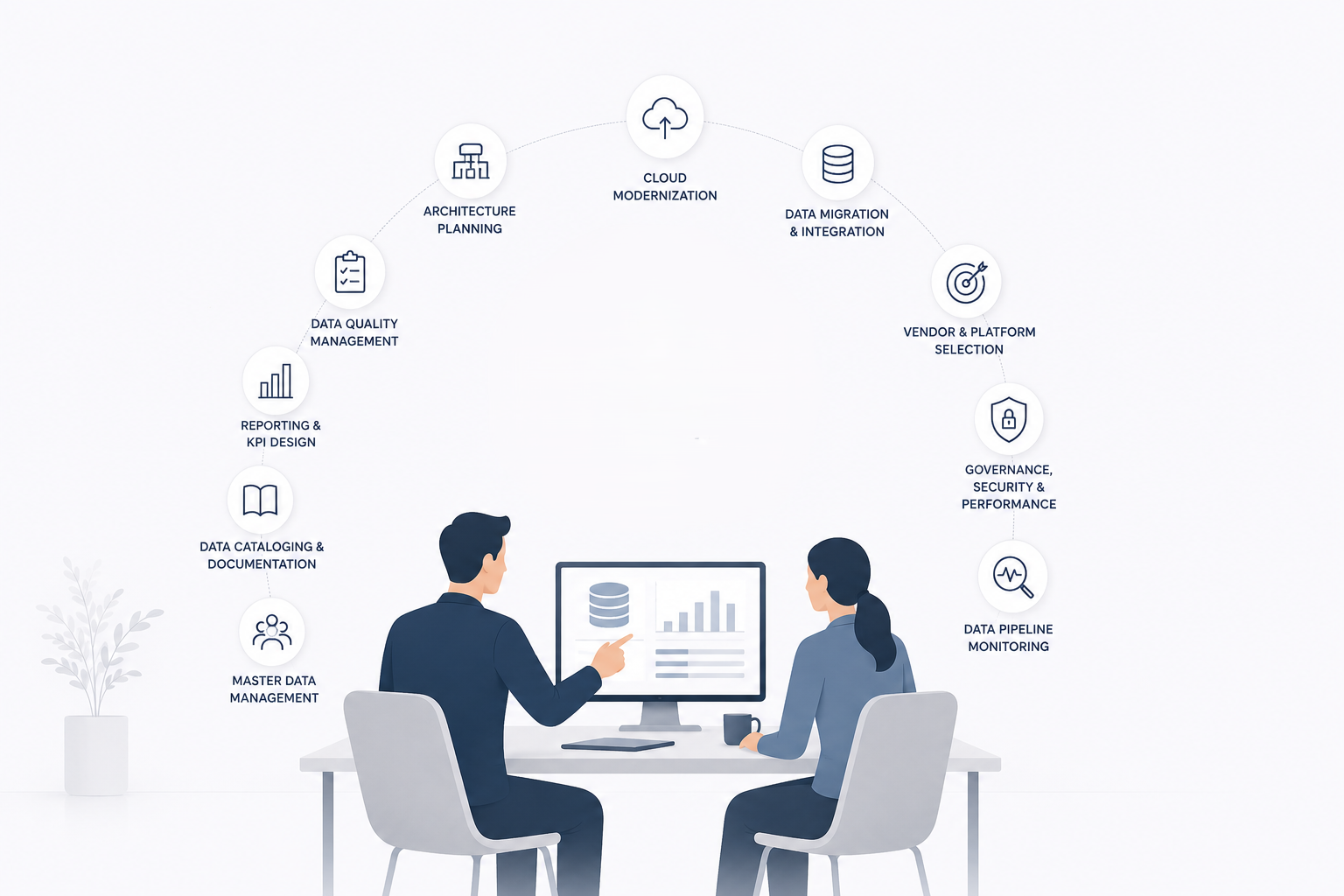
Data warehouse consultants reviewing architecture, migration, governance, data quality, reporting, and monitoring.

Why Businesses Hire Data Warehouse Consultants?

Companies pay for data warehouse consulting to avoid mistakes that cost far more than the fee. Cloud migration research found that organizations running a formal readiness assessment before they migrate succeed at 2.4 times the rate of those that skip it (IDC). A consultant is, in part, that readiness assessment.

The mistakes are predictable. One team sizes its warehouse for peak load and pays for that capacity every hour of the year. Another writes transformations that reprocess the full history every night when a daily increment would do. A third signs a multi-year contract on a platform that cannot handle the semi-structured data its product generates. Each of these is a six- or seven-figure error that an experienced consultant spots early.

Speed is the other reason. An in-house team learning a new platform during a live migration moves at a crawl and breaks things. An experienced consultant gets you there faster and helps you sidestep the costly mistakes.

A retailer planned to refactor every report during its move to a cloud warehouse, a job its team estimated at five months. A consultant reviewed the report catalog first and found that forty of the sixty reports were duplicates or unused. The team rebuilt twenty, finished in seven weeks, and cut the future maintenance load by two-thirds.

Speed Benefits of Cloud Data Warehouse Consulting

Cloud data warehouse consulting now spends as much time controlling the bill as building the system. Cloud warehouses charge for compute by the second, so an oversized or always-on setup bills every hour it runs, whether anyone queries it or not. The cloud data warehouse market sat near $14.9 billion in 2026 and is growing about 27 percent a year through 2031 (Mordor Intelligence), and a large share of that spend is idle capacity nobody is using.

The common wins are dull and effective. A consultant right-sizes the compute tiers, turns on auto-suspend so idle warehouses stop charging, splits heavy workloads so one bad query does not slow everyone else, and pushes cold data to cheaper storage. One retailer cut its warehouse bill by 40 percent after a consultant uncovered costly infrastructure that was rarely needed.

Speed is the other half of the job. A nightly batch load was fine when executives read reports the next morning. When a logistics team wants to see delays as they happen, or a payments team needs to flag a bad transaction in seconds, the warehouse needs streaming pipelines and a model built for fresh data. Consultants are often brought in to make that switch without breaking the reports the business already runs every day.

What the Best Data Warehouse Consulting Companies Have in Common

The best firms share a few traits, and none of them is a long wall of client logos. They ask about the business problem before technology. They value in-depth diagnosis before a large build. And they write down what they find, so the project survives after they go.

  • Platform neutral advice. Strong data warehouse consulting companies recommend the platform that fits your workload, even when it earns them a smaller margin.
  • A real diagnostic. Good firms spend a week understanding your data before quoting a build. A fixed quote on day one usually means a generic plan.
  • Knowledge transfer. Look for a team that trains your engineers as it works, so you are not stuck calling the consultant for every small change.
  • Proof of outcomes. Ask for specific results. For example, query time cut from hours to minutes, cost reduced by a named percentage, and a migration finished on schedule.

When you weigh firms, put references and real metrics ahead of certifications. A firm that can name the cost it saved a comparable client tells you more than one that lists every badge its staff holds.
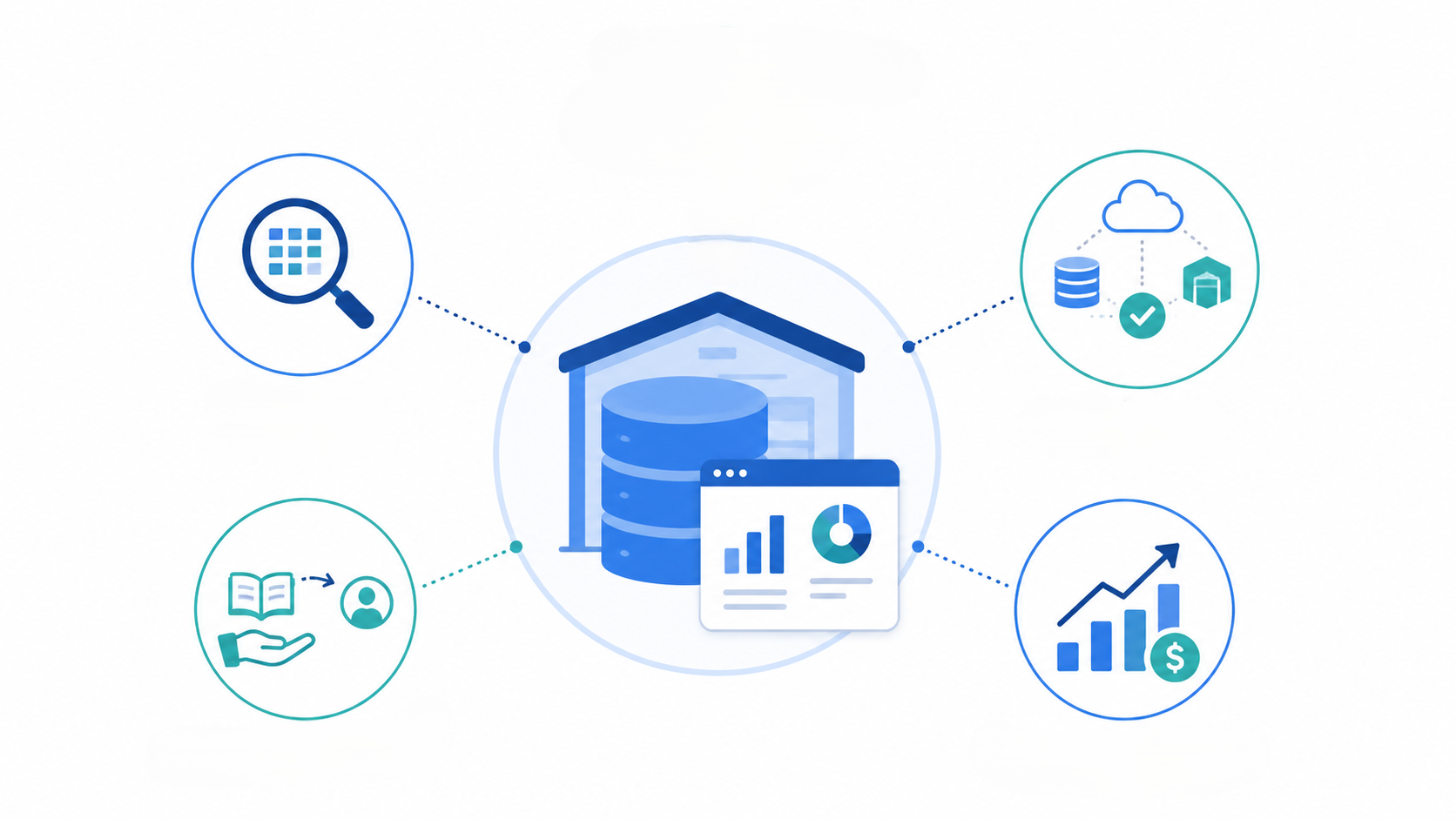
Data warehouse platform connected to analysis, cloud integration, knowledge transfer, and cost optimization.

What a Data Warehouse Consulting Engagement Looks Like

A good data warehouse consulting engagement moves in clear phases, so you are never paying for open-ended work. 

The first phase is diagnostic. The consultant reviews your data sources, your current warehouse, your costs, and the reports people argue over. Then, he comes back with findings in a week or two.

The second phase is a written roadmap. The consultant lays out the target architecture, explains the platform choice and the reasoning behind it, defines the migration or integration sequence, and provides a cost estimate you can hand to finance. This document keeps the project from drifting and gives you a way to hold the work to a number.

The last phase is build. The consultant rebuilds the data model, moves or connects the systems, and tunes performance in stages. This allows existing reports to keep working while the new setup comes online.

The last phase is handover. Documentation, governance rules, and training, so your team owns the system once the consultant steps away.

Where to Start

If your reports are slow, your cloud costs keep rising, or a migration has stalled, do not start with a big build. Start with a conversation. We will look at your data sources, your costs, and the reports your teams argue over, then tell you whether you need migration, integration, or a round of tuning.

Book a free consultation and we will name the real bottleneck before you spend a dollar on the build.

Book a Free 30-Minute Meeting

Discover how our services can support your goals — no strings attached. Schedule your free 30-minute consultation today and let's explore the possibilities.

Book a Free Call

Frequently Asked Questions

A data warehouse consultant is a specialist who designs, builds, and tunes the central system a company uses for reporting and analytics. The role covers strategy, platform choice, data modeling, migration, and governance. It bridges the gap between what the business needs and what the engineering team builds.

A data warehouse consultant plans the data model, moves data into a cloud platform, connects source systems, and tunes the result for speed, cost, and security. They also help pick the right vendor and document the system so the team can maintain it. A single project often spans architecture, migration, and cleanup at once.

Migration moves data from an old system into a new one, then retires the old store. Integration keeps several systems running and wires them together so the warehouse always reflects current numbers. Teams confuse the two, which is one reason projects slip. The plans, costs, and risks differ a lot, so a good consultant tells you which one you actually need before any work starts.

Hire help when reports run slow, when two teams report different numbers, or when cloud costs climb without explanation. The best moment is before a migration starts. Informatica found 84 percent of cloud migrations miss budget or timeline, and a readiness review is the cheapest insurance against joining that group.

Skip the guesswork on price. Start with a short free diagnostic: we review your data, your costs, and your reports, then quote the real work before you commit to a number. Talk to us about a data warehouse review.

A data engineer builds and maintains pipelines day to day, usually inside one company. A data warehouse consultant brings cross-company experience to strategy, platform choice, and high-stakes work like migrations. Once the system runs, the consultant hands it back to the in-house team.

Book Consultation